Page 20 of 23

The Rewards of Learning Greek and Hebrew with McDowell & Towner
To hear the podcast click here.

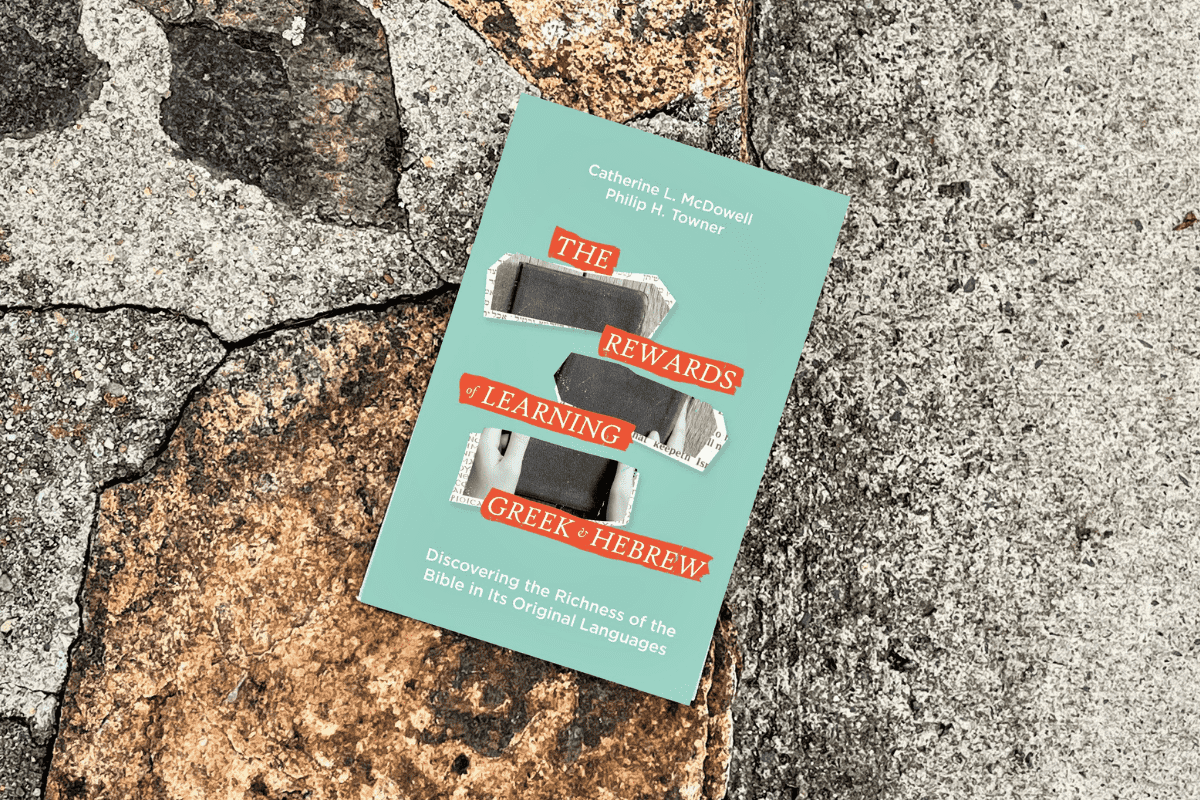
Both Cathy McDowell and Phil Towner join David Capes on “The Stone Chapel Podcast” to talk about their new book: The Rewards of Learning Greek and Hebrew: Discovering the Richness of the bible in its Original Languages (Tyndale House Publishers). So much of the richness of the Greek New Testament and Hebrew Old Testament is hidden in translation or not translatable. 

They wrote their book to promote the study of the Biblical languages.  These days it has become less common for seminarians to study Biblical languages. Many seminaries and graduate schools do not require the languages any longer. Also, they do not offer enough courses so people can actually use the language after graduation.  Forty to fifty years ago that was not the case.

Why the change?  McDowell thinks the root is money.  Enrollment is down, and schools are making their degrees shorter and easier. To be honest, the language courses are some of the most difficult. 

Many popular ministers today do not focus on expository preaching.  When they did, they talked about the Greek and the Hebrew in their sermons. So younger people are not being exposed to these insights in sermons. Another factor. The advances in computer technology cause Bible students to imagine they can avoid the hard work of language learning.  

At the Lanier Theological Library we are interested in teaching people Greek and Hebrew.  That is why we regularly offer Greek classes at the library. 

Keep watching the Library website because soon we are going to teach Hebrew too. 

Catherine McDowell is associate professor of Old Testament at Gordon Conwell Seminary in Charlotte, NC.

The Rev’d Dr. Philip H. Towner is a professor at Pontifical Urbaniana University in Rome, where he teaches translation studies. He is also a visiting professor of New Testament exegesis and translation at the Pontifical Biblical Institute, Rome.

Stick around for a nugget of wisdom!

To hear the podcast click here.

If you are interested in Biblical languages, you may enjoy this previous lecture at the library. Click on the title.

“Between the Chairs” New Testament Evidence for the Hebrew Jesus Spoke

Ruth: Boaz’s Generosity with Catherine McDowell

Dr. Catherine McDowell is Associate Professor of Old Testament at Gordon-Conwell Theological Seminary, having previously taught at Wheaton College. She also serves part-time as a professor of Hebrew and Old Testament at Séminaire Théologique Mondelus in Milot, Haiti. Among other things, she has authored, The Image of God in the Garden of Eden: The Creation of Humankind in Genesis 2:5-3:24 in Light of the mīs pî, pīt pî, and wpt-r Rituals of Mesopotamia and Ancient Egypt. Today’s topic: Though some English translations have failed to convey this, the author of Ruth 3:17 was using word order to emphasize both Boaz’s excessive generosity and God’s care for the poor and marginalized.

To hear the podcast (8 minutes) click here.

The Lord Roars from Zion with Danny Carroll

Danny Carroll Rodas, Wheaton College

To hear the podcast (20 minutes) click here.

Danny Carroll is an expert in the Hebrew Prophets.  He’s thought deeply and written significantly about them for years. 

In this podcast he discusses his new book, The Lord Roars: Recovering the Prophetic Voice for Today.

Danny Carroll Rodas is an Old Testament ethicist who serves as the Scripture Press Ministries Professor of Biblical Studies and Pedagogy at Wheaton College and Graduate School in Wheaton.

He has been to the Lanier Theological Library on a couple of occasions, most recently to give a lecture in Spanish to members of our community. You can watch the lecture here.

In today’s podcast Dr. Carroll R. discusses the work of three Old Tesatament prophets: Isaiah, Amos, and Micah. He does an artful job explaining the history, culture, and poetry behind these prophets whose oracles were recorded a brief time after they were delivered.  

The words of the Lord came to Hebrew prophets in their day but they continue to speak in ours. 

Among other things, the Hebrew prophets were cultural critics in their time and can be in ours when our values and practices violate the decent and reasonable laws of God. 

Questions emerge today about immigration, the environment, and our polarized rhetoric and politics.  Does God have anything to say on these challenging topics.

Here is what Dennis Edwards of North Park Theological Seminary said about the book:

“Perhaps some of us employ the adjective prophetic hastily or uncritically, but many more of us are reluctant to heed the words of prophets–even the prophets identified in the Bible. Carroll demonstrates why and how biblical prophets speak to a myriad of social issues, including many that we presently face. His rigorous exegesis, historical analysis, and cultural awareness converge to give Bible readers a better understanding of Scripture’s prophetic tradition and how it applies right now.”

Danny joined us on the podcast a few months ago to discuss the Bible and immigration. Click here to listen to the podcast.

To hear the podcast (20 minutes) click here.

Bible, Theology, and Language with Randy Hatchett

Dr. Randy Hatchett

To hear the podcast (9 minutes) click here.

Dr. Randy Hatchett is Professor of Theology and Program Coordinator for Theological Studies and for Christianity at Houston Baptist University. Among other things, he has written Engaging Theology: A Biblical, Historical, and Practical Introduction. In this conversation with Dr. Capes he reminds us that at every step the study of biblical languages is crucial for reading the unfolding story of our texts (economy) and the necessary theologizing upon these texts (theology).

To hear the podcast (9 minutes) click here.

“Exegetically Speaking” is a weekly podcast of the friends and faculty of Wheaton College, IL and The Lanier Theological Library. Hosted by Dr. David Capes, it features language experts who discuss the importance of learning the biblical languages—Hebrew, Aramaic, and Greek—and show how reading the Bible in the original languages “pays off.” Each podcast lasts between seven and eleven minutes and covers a different topic for those who want to read the Bible for all it is worth.

If you’re interested in going deeper, learn more about Wheaton’s undergraduate degree in Classical Languages (Greek, Hebrew, and Latin) and our MA in Biblical Exegesis

You can hear Exegetically Speaking on SpotifyStitcherApple Podcasts, and YouTube. If you have questions or comments, please contact us at exegetically.speaking@wheaton.edu. And keep listening.

Cultural Engagement with Ed Stetzer

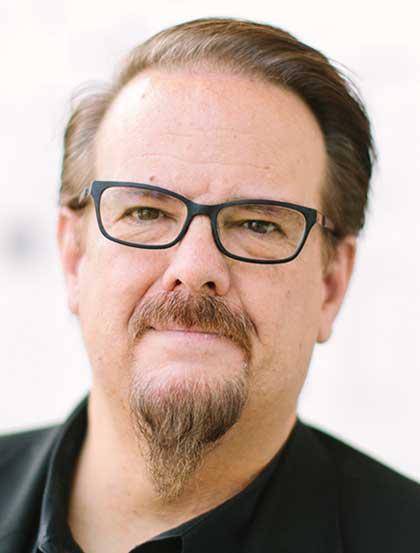
Ed Stetzer, Wheaton College

I recently talked with Ed Stetzer for “The Stone Chapel Podcasts.”

To hear the podcast (20 minutes) click here.

Ed Stetzer is skilled in cultural engagement.  He is simply wired that way.  He is a professor and dean at Wheaton College where he also serves as Executive Director of the Wheaton College Billy Graham Center.

He has planted, revitalized, and pastored churches, trained pastors and church planters on six continents. 

He has earned two master’s degrees and two doctorates.  He has written hundreds of articles and a dozen books.

Dr. Stetzer is Regional Director for Lausanne North America and is frequently cited in, interviewed by, and writes for news outlets such as USAToday and CNN. 

Ed joins David Capes on The Stone Chapel Podcast to talk about his concerns for the future of the evangelical church and its engagement with western culture. 

In fact, he is finishing up a book about that for InterVarsity Press.  It will be titled, The Future of Evangelicalism. Look for it next year at the Lanier Theological Library. 

America is experiencing a cultural convulsion unlike any we have seen since the 1960s.  And to all observers, America evangelicalism is uniquely influential around the world.

 Rather than thriving in the midst of this time, American evangelicals are themselves convulsing and sorting themselves along ideological lines. 

Stetzer observes: Some have gone “woke.”  Some have gone “political.”  Some have gone full on “Trump.”  Twenty years ago were certainly kinder and gentler times.

Dr. Stetzer is a unique voice for American Christians and has some interesting insights about where America is going and how best to be part of bringing about at least some “Shalom”/Peace for now. 

In the academic year 2022-23 Ed Stetzer is on sabbatical from Wheaton College and will be the guest of the Lanier Foundation staying, along with his wife Donna, at Yarnton Manor. 

He will be teaching two classes for Wycliffe Hall and finishing up yet another book entitled for now, “The Mission to Western Culture.”

You can read more about Ed Stetzer on his webpage: www.edstetzer.com.  He is witty and winsome, and that’s a good thing!  You can follow him on Twitter @edstetzer.

Be sure to stick around for a nugget of wisdom from Ed at the end of the podcast.

One of Ed’s more recent books is Christians in the Age of Outrage. It’s worth a read if we want to be our best when the world is at its worst.

To hear the podcast click here.

For more of cultural engagement at the Lanier Theological Library, click here.