
Not Every Woman at the Party is a Concubine with Aubrey Buster

To hear the podcast click here.

Daniel 5:2, within the Aramaic portion of Daniel, has always been taken to refer to the king, his nobles, his wives, and his concubines, but a fresh look at the Aramaic and its context suggests that the last were female officials, not concubines. Dr. Aubrey Buster, who has been with us before, is Associate Professor of Old Testament at Wheaton College. Her publications include Remembering the Story of Israel: Historical Summaries and Memory Formation in Second Temple Judaism. She and John Walton are co-authoring a major commentary on Daniel (NICOT). The first volume on Daniel 1-6 is due out soon.

The Exegetically Speaking podcast is about 10 minutes in length. It is a joint effort of Wheaton College and the Lanier Theological Library.
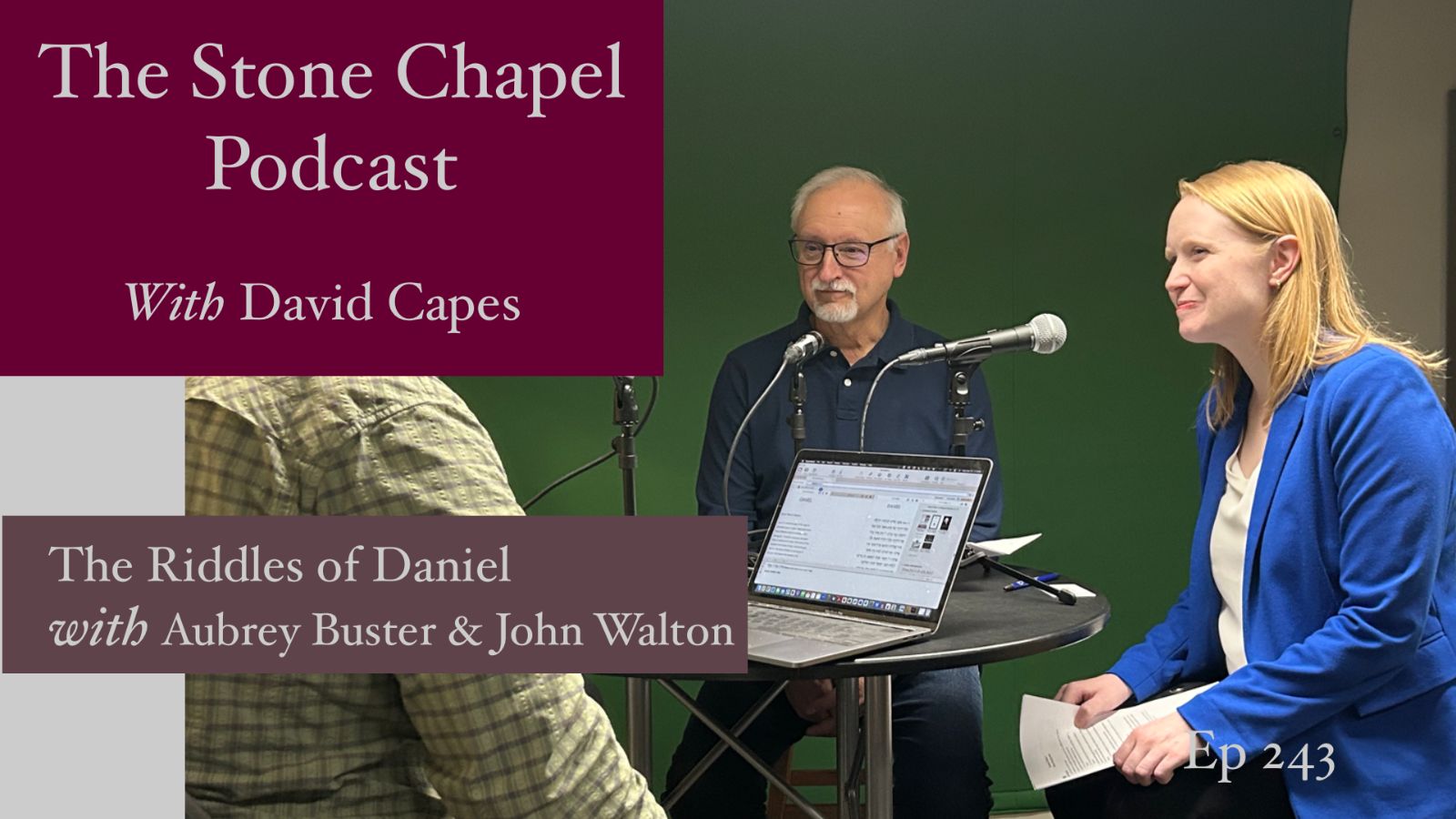
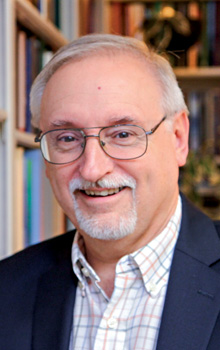
The Riddles of Daniel with Aubrey Buster and John Walton

To hear the podcast (20 min, The Stone Chapel Podcast) click here.

Drs. Aubrey Buster and John Walton have been hard at work for seven years writing a commentary on the book of Daniel. They join David Capes on “The Stone Chapel Podcast” to talk about some of the key questions surrounding the book. Daniel is one of the most colorful books in the Old Testament. It is often misunderstood and misapplied. Buster and Walton will solve every riddle!


“The Stone Chapel Podcast” is part of the ChurchLeaders Podcast Network.
For a transcript of this episode click here: https://churchleaders.com/podcast-episode/stone-chapel-riddles-daniel-aubrey-buster-john-walton
This podcast is about 20 minutes in length.

Curse or Consequences? with John Walton

Genesis 3

John Walton, Wheaton College

Dr. John Walton, Professor of Old Testament at Wheaton Graduate School, author of many books and articles relating to the background, literature, and theology of the Old Testament, has contributed several episodes to this podcast. Currently, he is collaborating with his Wheaton colleague, Dr. Aubrey Buster, in writing a commentary on Daniel. In this conversation with David Capes, he gives some fresh and helpful attention to some of the language that God addresses to the rebellious actors of Genesis 3. Consequences of their acts bring, among other things, anxiety about conception and a desire for spousal support in the form of domestic stability and order.

To hear the podcast click here.

“Exegetically Speaking” is a weekly podcast of the friends and faculty of Wheaton College, IL and The Lanier Theological Library. Hosted by Dr. David Capes, it features language experts who discuss the importance of learning the biblical languages—Hebrew, Aramaic, and Greek—and show how reading the Bible in the original languages “pays off.” Each podcast lasts between seven and eleven minutes and covers a different topic for those who want to read the Bible for all it is worth.

If you’re interested in going deeper, learn more about Wheaton’s undergraduate degree in Classical Languages (Greek, Hebrew, and Latin) and our MA in Biblical Exegesis

You can hear Exegetically Speaking on SpotifyStitcherApple Podcasts, and YouTube. If you have questions or comments, please contact us at exegetically.speaking@wheaton.edu. And keep listening. 

Context is King

Dr. John Walton, Professor of Old Testament at Wheaton College Graduate School, and I recently had a chat on Exegetically Speaking. He lays out the importance of knowing the context of a passage to understand it.  After discussing four kinds of context for exegesis, he focuses on the historical context.  As a test case, he takes us to Daniel 7:1 to understand what is happening historically at the time of Daniel’s fantastic vision. 

To hear the 7 minute podcast, you can cut and paste the following URL to your browser:

https://exegeticallyspeaking.libsyn.com/context-is-everything-historical-context-daniel-71

or click here.

“Exegetically Speaking” is a weekly podcast of the friends and faculty of Wheaton College, IL and The Lanier Theological Library. Hosted by Dr. David Capes, it features language experts who discuss the importance of learning the biblical languages—Hebrew, Aramaic, and Greek—and show how reading the Bible in the original languages “pays off.” Each podcast lasts between seven and eleven minutes and covers a different topic for those who want to read the Bible for all it is worth.

If you’re interested in going deeper, learn more about Wheaton’s undergraduate degree in Classical Languages (Greek, Hebrew, and Latin) and our MA in Biblical Exegesis

You can hear Exegetically Speaking on SpotifyStitcherApple Podcasts, and YouTube. If you have questions or comments, please contact us at exegetically.speaking@wheaton.edu. And keep listening. 

Confronting the False Image

In this episode of “Exegetically Speaking” . . .

Dr. Ron Haydon, Adjunct Assistant Professor of Old Testament at Wheaton College, looks Daniel 3, where Nebuchadnezzar demands the worship of a golden idol. Dr. Haydon draws some insights from Aramaic to unpack several important theological nuances in Daniel 3.

You can copy and paste the following URL to your browser:

https://exegeticallyspeaking.libsyn.com/confronting-the-false-image

or click here.

The podcast lasts approximately 7 minutes.