Page 2 of 4

Formatting the Word of God with Dan Wallace

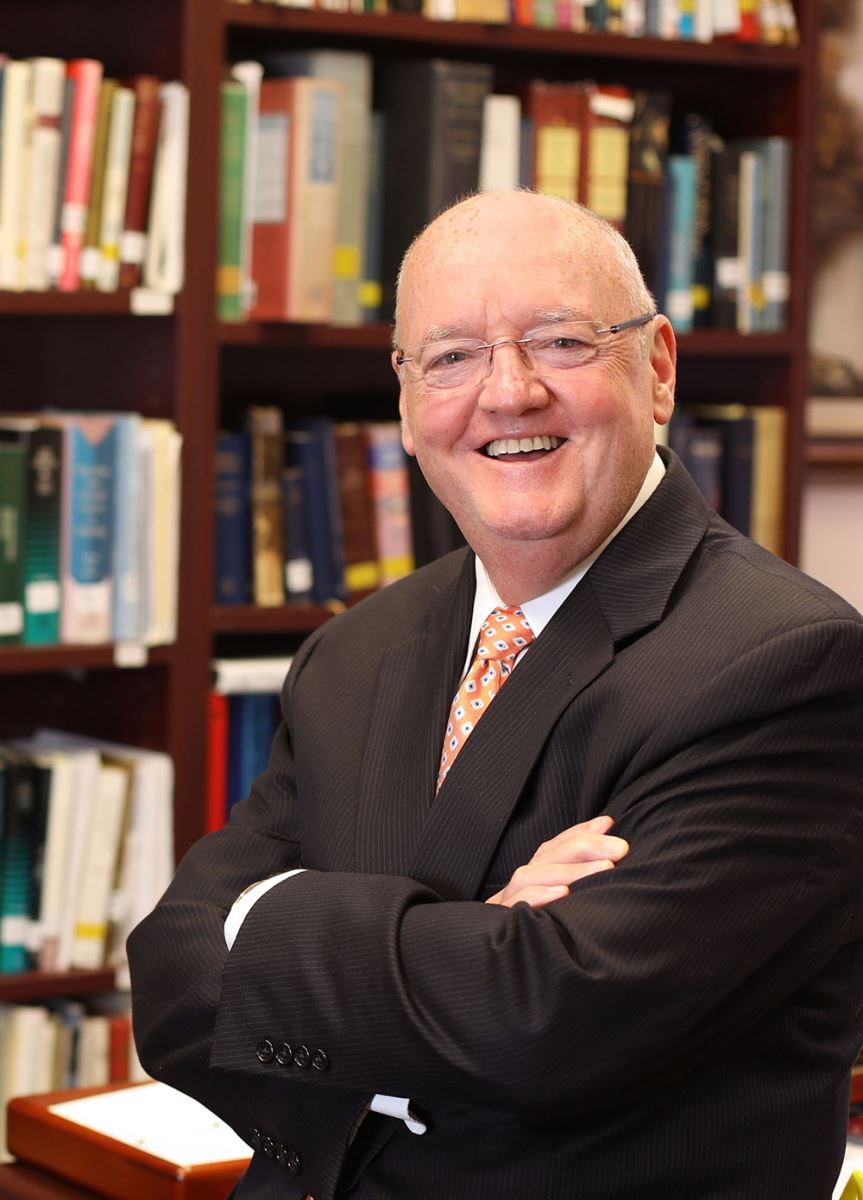
In May 2023 Dan Wallace lectured at the Lanier Theological Library. His topic was “Formatting the Word of God.”  Before the lecture, he sat down to talk with David Capes for “The Stone Chapel Podcasts.”

Who is Dan Wallace? 

Dan Wallace is the CEO and executive director of the Center for the Study of New Testament Manuscripts (CSNTM) in Plano, Texas.

Formatting the Word of God

From the beginning, people who hand copied the New Testament manuscripts put into the manuscripts features which made the reading of Scripture easier.  But these features led to certain interpretations.

The Bible has certain formatting to it. It has to. Every literary product has to. For example, how wide should the margins be for a text? How wide should the text be? Is it going to be on a three-foot papyrus roll? So, there’s some formatting.

Certain features, for example, make it easier to read in public.  Other features of copying indicate respect for and devotion to Christ. 

Dan’s lecture will be rich in imagery drawn from the thousands of photographs of these amazing manuscripts that this organization has taken over the last decades. (You can find a link to it below. It was a little over one hour long.)

Still thousands of manuscripts remain unphotographed.  But his organization has discovered many other manuscripts not previously catalogued. 

Even the form of the book itself—the codex not scrolls or rolls—has a certain interpretive significance. 

The Center for the Study of New Testament Manuscripts

Because these manuscripts and inks are organic, over time they will decay, fade, and become unreadable.  That’s one reason Dan started the Center for the Study of New Testament Manuscripts: to preserve these valuable artifacts. 

But there is another reason.  The goal of the center is to make high quality, digital images available to all people.  If the staff  meet their goal, then in the future anyone in the world with an internet connection will be able to view images of available manuscripts. 

Formatting Today

Modern Bibles continue the interpretive features.  Chapters, verses, columns, italicizing, page numbers, cross-referencing, and interpretive notes are employed by publishers and these guide readers to interpret the texts. 

For the website of the CSNTM, go to www.csntm.org

To hear the complete lecture click here.

To hear Dan Wallace’s previous podcast on the history and mission of the CSNTM click here.

Would you like a transcript of this podcast? Click here.

More resources

Want more Stone Chapel Podcasts on some great topics. Just click here.

What’s more, you can get information on upcoming lectures at Lanier Theological Library. Just click here.

To hear the podcast (22 minutes) click here.

Bible, Theology, and Language with Randy Hatchett

Dr. Randy Hatchett

To hear the podcast (9 minutes) click here.

Dr. Randy Hatchett is Professor of Theology and Program Coordinator for Theological Studies and for Christianity at Houston Baptist University. Among other things, he has written Engaging Theology: A Biblical, Historical, and Practical Introduction. In this conversation with Dr. Capes he reminds us that at every step the study of biblical languages is crucial for reading the unfolding story of our texts (economy) and the necessary theologizing upon these texts (theology).

To hear the podcast (9 minutes) click here.

“Exegetically Speaking” is a weekly podcast of the friends and faculty of Wheaton College, IL and The Lanier Theological Library. Hosted by Dr. David Capes, it features language experts who discuss the importance of learning the biblical languages—Hebrew, Aramaic, and Greek—and show how reading the Bible in the original languages “pays off.” Each podcast lasts between seven and eleven minutes and covers a different topic for those who want to read the Bible for all it is worth.

If you’re interested in going deeper, learn more about Wheaton’s undergraduate degree in Classical Languages (Greek, Hebrew, and Latin) and our MA in Biblical Exegesis

You can hear Exegetically Speaking on SpotifyStitcherApple Podcasts, and YouTube. If you have questions or comments, please contact us at exegetically.speaking@wheaton.edu. And keep listening.

Why I Trust the Bible with Bill Mounce

Bill Mounce

Dr. William D. “Bill” Mounce  joins David Capes on the Stone Chapel to talk about his new book, Why Should I Trust the Bible? Answers to Real Questions and Doubts People Have about the Bible (Zondervan, 2021).  In this podcast he talks about his book which is for 17 year olds and their parents. 

Unfortunately, church often teaches people that they  should not ask certain questions.  But Bill insists that we should have freedom to ask all questions in the church.  This book is to help equip parents and church leaders to answer those questions.  

When people say the Bible is full of errors, Bill asks: “show me one.” He knows that they are just parroting what they heard in class or on cable channels.  

For Bill doubt is not the opposite of faith; instead doubt helps us to learn. Faith often grows and succeeds through genuine doubts.  

Bill is president of BiblicalTraining.org, a non-profit organization offering excellent educational resources to local churches. 

 Dr. Mounce has been an educator, a pastor, a writer, a Bible translator (English Standard Version and New International Version) and is affectionately known as “Mr. Greek” to hundreds of thousands of his students who have used his Greek textbook, Basics of Biblical Greek.  

In his lecture at the Lanier Library in April 2022) he met head on the challenges people often face when thinking about whether they should trust the Bible.   

 To read more about Bill, go to his website: BillMounce.com  

To hear the podcast (20 minutes) click here.

Bill Mounce appeared on “Exegetically Speaking,” a podcast of the friends and faculty of Wheaton College, to talk about BiblicalTraining.org.  To hear that podcast (8 minutes) click here.

To watch Dr. Mounce’s lecture at the Stone Chapel click here. 

MisReading Scripture with Western Eyes with Randy Richards

Randy Richards

E. R. (“Randy”) Richards, Provost and Professor of New Testament at Palm Beach Atlantic University, joins David Capes on “The Stone Chapel Podcast” to talk about his book, Misreading Scripture with Western Eyes (written with Brandon J. O’Brien [IVP], 2012).

The book’s subtitle Is “Removing Cultural Blinders to Better Understand the Bible.”

Dr. Richard’s life has been shaped by his experiences as a missionary in Indonesia. In those years he saw how he tended to read Scripture through a cultural lens vastly different from the world of the Bible. 

This is not a book about bashing the West; no, Richards celebrates all the contributions the West has made to furthering the gospel. But he does want to alert us to the subtleties of “what goes without being said” in our culture and the Scriptures’.

He gives two examples: the first, from the Joseph story (Genesis) and second, from Paul’s admonition in 1 Timothy for women to dress “modestly.” What goes without being said, in both cases, differs from various cultures.

Now, any cultural reading could be off, and Dr. Richards admits that.  Someone, he says, should write a book “Misreading Scripture with Eastern Eyes.” This is an important book and a timely book. The Bible does not come from the Middle West but from the Middle East.

To hear the podcast (20 minutes) click here.

We Have a Book Called ‘The Bible’

Last year I had the chance to meet Dr. John Behr (PhD, Oxford). He is a rock star among scholars. He is known around the world as an expert in the Church Fathers. In this episode of “The Stone Chapel” he tells the story of how he came to the Orthodox faith.  After discussing some of the differences between the Orthodox and Protestant faiths, he proposes that one difference is the problem: “we have a book called ‘The Bible’ (‘the Book’).  The fact that we divide it into two parts, the Old Testament and the New Testament, means that we miss something fundamental. This is part one of a two part conversation.

Father John Behr

To hear the podcast click here.

The Stone Chapel is a podcast of the friends and staff of the Lanier Theological Library in Houston, Texas.  It is hosted by Dr. David Capes, Senior Research Fellow at the library and former faculty member at Houston Baptist University and Wheaton College.  The purpose of the podcast is to bring to our audience great conversations from the world’s leading experts in theology, biblical studies, archaeology, Church history, the Dead Sea Scrolls, ethics, ministry, and a host of other topics close to the mission of the library.

The Lanier Theological Library is a magnet for scholars, church leaders and influencers.  For the last ten years, it has welcomed hundreds of academics and church leaders from across the globe for public lectures, study, panel discussions, consultations, and encouragement.

These podcasts as well as the Lanier library and the Stone Chapel are generously underwritten by Mark and Becky Lanier and the Lanier Theological Library Foundation.  If you have questions or comments, please be in touch: Email david.capes@lanierlibrary.org