
Tongues Speaking in the Early Church (Pt. 1)
Here is an article I wrote a few years ago for The Biblical Illustrator.
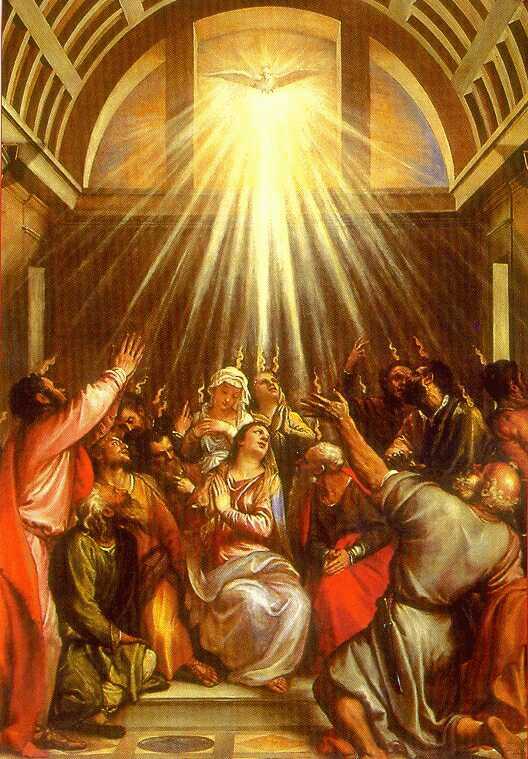
In 1 Corinthians 12-14 Paul provides the first record of the Christian practice of speaking in tongues, or glossolalia. Those who study Scripture and early Christianity find the practice a bit baffling for a number of reasons. First, the earliest, firsthand description of speaking in tongues depicts a church divided over the practice with Paul urging restraint on the part of those who do and tolerance by those who don’t. In the final analysis to forbid tongues speaking is no better than flaunting it (1 Cor 14:39). Second, it is not at all clear how pervasive the practice is.  Although Paul wrote thirteen letters in the New Testament, the practice is mentioned only in 1 Corinthians. Moreover, in the two other places where Paul catalogs spiritual gifts–Romans 12 and Ephesians 4—tongues fails to make the list. Some have concluded the practice is so widespread it is hardly worth mentioning except when there was a problem (as at Corinth). Others read the evidence to say there was little or no tongues speaking going on in Paul’s other churches. Third and perhaps most puzzling, it is also not clear whether Luke’s account in Acts of the disciples speaking in tongues is of the same sort as what we find happening in Corinth. In Acts 2 Luke recounts the coming of the Spirit on the followers of Jesus in Jerusalem during Pentecost after Jesus’ crucifixion. When the Spirit comes, they see visions and begin speaking in tongues. Those Jewish pilgrims who have come to Jerusalem for the festival hear the disciples praising God in their own languages (Acts 2:1-11). Some interpreters have understood this not so much a miracle of speaking as it is a miracle of hearing for the pilgrims say: “Why, are not all these who are speaking Galileans? And how is it that we each hear them in our own language to which we were born?” (Acts 2:7-8, NASV).[1] Despite this way of reading the text, it may well be that Luke meant to describe miraculous speech. Therefore, let the reader understand that Galileans began speaking the native languages of Parthians, Medes, Cappadocians and many others although they had never studied or learned those languages. The other accounts in Acts which describe speaking in tongues (Acts 10:44-48; 19:1-7) occur with the newly converted but no mention is made whether these “gifts of the Spirit” should be understood as real, human languages. Paul’s description in 1 Corinthians 12-14, on the other hand, points to the fact that tongues speaking does not involve a known, human language; rather it is Spirit-inspired speech directed toward God not other people (1 Cor 14:2).[2] For these and other reasons, the origin and practice of tongues speaking in the early church lays shrouded in mystery.
The situation is complicated to some extent by the fact that similar practices are found in other religions. The Old Testament records that some early Hebrew prophets experienced episodes of ecstasy and inspired speech which may border on glossolalia (1 Sam 10:5-13; 19:18-24; 2 Sam 6:13-17; 1 Kings 20:35-37) although not all are agreed on this. Perhaps more to the point is the pagan phenomenon known as mantic prophecy. In mantic prophecy a divine spirit so possesses a prophet (known as a mantis) that the person falls into a trance-like state and speaks messages from a god. Evidence suggests the language used was inarticulate and had to have an interpreter to be understood by the one seeking the oracle.[3] Similar phenomena appear in the ancient cults of the Dionysius and Cybele.[4] The relationship of early Christian glossolalia to any parallel phenomona is not self-evident.
[1] Luke Timothy Johnson, Religious Experience in Earliest Christianity (Minneapolis: Fortress, 1998), 111.
[2] Gordon Fee, The First Epistle to the Corinthians NICNT (Grand Rapids: Eerdmans, 1987), 598.
[3] Johnson, 113-4.
[4] E. Andrews, “Tongues, Gift of,” in The Interpreter’s Dictionary of the Bible (Nashville: Abingdon), 4:671-2.
[5] Fee, 571.


 A Word in Edgewise
You must be logged in to post a comment.