Page 80 of 126

Ten Reasons Why the Original Languages Are Important in Exegetical Work

Veteran interpreter, Dr. John Walton, goes briefly through ten reasons why knowing and working in the original, biblical languages–Greek, Hebrew, and Aramaic–are important if you want to get at the meaning behind the Scriptures. john walton

http://exegeticallyspeaking.libsyn.com/10-reasons-the-original-languages-are-important-exegetical-work

or click here.

A Show of Faith

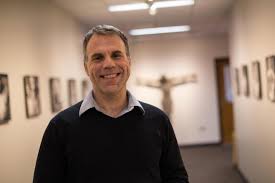
Recently the Houston Chronicle, Houston’s only newspaper, did an article on a radio show I have helped to cohost for 15 years.  It’s called “A Show of Faith” and its airs Sunday 7.00 to 9.00 pm (Central Time) on AM 1070 The Answer.  You can find it on IHeartRadio and other apps.  Now that I live in Wheaton, IL, I am not able to be on weekly, but I do call in regularly for the two hours, and I visit the studio whenever I am in the city.  The priest and the rabbi are two of my best friends.  Our mission is to talk about events in the news from the standpoint of a priest, minister and rabbi.  Another aspiration we have is to show that you can be friends across faiths.

Here is the URL:

https://www.houstonchronicle.com/life/houston-belief/article/A-rabbi-a-minister-and-a-priest-unite-in-13555434.php

or click here.

Living under the Orders (Part One)

In this episode of Exegetically Speaking, Gene Green, professor of New Testament at Wheaton College, discusses how he became a student of Greek through his local, Pentecostal church.  Then he guides us in thinking biblically about submission: to governing authorities (1 Pet 2.13); to masters (1 Pet 2.18); within the family (1 Pet 3.1); to elders (1 Pet 5.5).Gene Green

Here is the URL:

http://exegeticallyspeaking.libsyn.com/living-under-the-orders-part-1

or click here.

Human Flourishing

Dr. Jonathan Pennington, associate professor of New Testament and director of the doctoral program at Southern Seminary, has written an important, new book on the Sermon on the Mount.  The title is The Sermon on the Mount and Human Flourishing: A Theological Commentary (Baker Academic, 2017).  You can find a link to Amazon here. The book is not exactly new; I’ve known about it for about a year now.  But it is new to me and perhaps to many of you.  Human Flourishing Pennington

Pennington is regarded broadly as an expert on the Gospel of Matthew.  Now, on the way to writing the prestigious Pillar Commentary on the whole Gospel, he paused and wrote an extensive theological commentary on the Sermon.  The Sermon on the Mount (Matthew 5-7) is probably the best known sermon of Jesus.  Oscar Brooks called it “the inaugural address” of Jesus because it laid out the platform for the kingdom of God.

At the heart of Pennington’s book, as the title shows, is an interpretation of the beatitudes and the Sermon as what we would call today “human flourishing.”  Essentially, what wisdom is needed and what virtues must be cultivated in order for humans–or in this case, Jesus-followers–to flourish.  He begins by re-translating the beatitudes (Matt 5.3ff) in a manner like: “Flourishing are the poor the spirit, . . . “; “Flourishing are those who mourn, . . . ”  You get the idea.  He moves the Greek word makarios out of the category of “happy” or “fortunate” or “blessed.”  While the term “human flourishing” may be anachronistic, it is heuristically valuable and gets at the heart of what is the good life and good society.

One of the most important features of the book is Pennington’s commitment to join together the Jewish wisdom tradition with Greco-Roman virtue ethics.  Rather than seeing these as discrete aspects of Galilean/Jewish culture, Pennington invites us to see these as mutually instructive.   He makes a good case for it.  But wisdom here is not just “this worldly,” it also has an eschatological dimension as well.  It is thoroughly Christ-centered and kingdom-focused.

Pastors and scholars have been writing on the Sermon for years.  My first encounter with a book devoted largely to it was Dietrich Bonhoeffer’s book The Cost of Discipleship.  I am not sure the trend will end, but I do think that Pennington’s book is likely to become one of the most significant books on the sermon for years to come.

To get the book, click here.


What is exegesis?

Veteran interpreter, Dr. John Walton of Wheaton College, describes the process of exegesis — from choosing a text, analyzing the genre and background, and grappling with the “linguistic core” — in this step-by-step explanation of how exegesis is done.john walton

Here is the URL:

http://exegeticallyspeaking.libsyn.com/what-is-exegesis

or Click here.