Page 16 of 126

The Divine Warrior Myth and Andy Angel

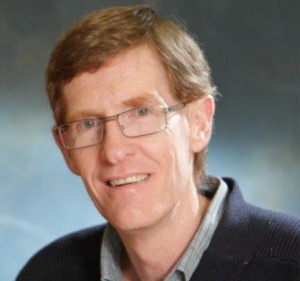
Andy Angel came to the Lanier Theological Library in Houston and discussed with David Capes some ideas he had about “The Divine Warrior” in Scripture. 

Who is Andy Angel? 

Andy is the Director of Formation for Ministry in the Diocese of Oxford in the UK. 

He arranges and plans for the theological education of the clergy and the lay people in the Anglican Church. 

Andy is an Englishman and an Anglican clergy.  For a time he served as a pastor-teacher in Lima, Peru. He is a husband and father.  And he’s is also an author. 

“The Divine Warrior” What does that mean?

There are passages in the Bible that describe God as a warrior for his people.  When they are defeated, when they are down for the count, God arrives to fight for them. 

And God’s coming is described in amazing pictures and images, such as God coming on the clouds, the falling of the stars from heaven, the mountains melting beneath his feet, the valleys quaking at his presence. 

This is more than metaphor;  it is figurative language, because the truth of it cannot be captured in words. As an example, he talks at length about Psalm 18. 

Jesus as the Divine Warrior

Also in this podcast he turns his attention to an upcoming book about the Divine Warrior occurrences in the book Mark. 

He is exploring how and to what extent Jesus’s conflicts with the demonic forces, diseases, and human power structures picture Jesus as the Divine Warrior. 

If this is what Mark had in mind as he wrote his Gospel, he is operating with a very high Christology.

Andy’s Books

Here are more of Andy’s books:

Intimate Jesus: The Sexuality of God Incarnate

The Jesus You Really Didn’t Know

Playing with Dragons: Living with Suffering and God

For a transcript of this podcast, click here.

More resources

Want more Stone Chapel Podcasts on some great topics. Just click here.

What’s more, you can get information on upcoming lectures at Lanier Theological Library. Just click here.

To hear the podcast (about 20 min.) click here.
Son of David/Son of God with Matthew Novenson

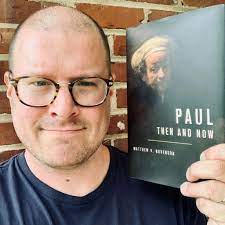
The Greek sentence that opens Paul’s letter to the Romans includes carefully worded claims about Paul’s gospel. Crucially, Paul identifies some of what he means when he refers to Jesus as Christ/Messiah: He is a descendent of David and the Son of God. He is the latter not only as a result of the resurrection but in a special way through that event.

Dr. Matthew V. Novenson is Professor of Biblical Criticism and Biblical Antiquities at the University of Edinburgh. Among recent publications are (author) Christ Among the Messiahs; Paul, Then and Now; and (co-editor) The Oxford Handbook of Pauline Studies.

To hear the podcast click here.

Signs and Wonders with Ben Marx

In this episode, Ben Marx shares how close attention to the phrase “signs and wonders” brings into focus how Luke narrates God’s work of salvation in Jesus, to which the apostles and others bear witness. This plays out against the backdrop of Moses’ miracles and plots the growing reach of the good news from Israel to the nations. Ben Marx is Professor of New Testament at the Instituto Bíblico Sinodal de Arequipa, Peru, and is a Ph.D. candidate at Trinity College Bristol/University of Aberdeen. His thoughts on this episode’s topic will be published in the Journal of Pentecostal Theology.

Check out related programs at Wheaton:

To hear the podcast (8 min) click here.

Including the Stranger with David Firth

David Firth joined David Capes on the Stone Chapel Podcasts to talk about his book: Including the Stranger: Foreigners in the Former Prophets (InterVarsity Press [U.S.] and Apollos [U.K.])

He and his wife were visiting the Lanier Theological Library from his teaching post in the United Kingdom.

Who is a stranger?

Today people are migrating all over the planet because of wars, economic crises, persecutions, and natural disasters. As a result, many people find themselves at one point or another as strangers and foreigners in a new land.

That presents us with both perils and opportunities. These are themes that are dealt with in surprising ways in the Old Testament.

Who is David Firth? 

David Firth is an Australian, and an Old Testament scholar living in the United Kingdom. For many years he and his wife were missionaries to Zimbabwe and South Africa.

In his current post he is Tutor in Old Testament at Trinity College Bristol in the United Kingdom and a Research Associate in Old Testament at the University of the Free State in South Africa.

Including the Stranger

The conversation begins with the category of the Former Prophets, a category Protestants often call books of “History.”

He then talks about the big ideas of his book. David has an interesting way of defining the “stranger” from the standpoint of Scripture. Be sure to listen for that.

According to Dr. Firth, one of the big questions these prophets are discussing is: Who are the people of God?  As you will discover, many of the insights in this book were gleaned from his encounters with people in Africa. 

Resources from David Firth

If you can’t find this book at your favorite theological library, ask them to order it!!!

For his book Including the Stranger, click here.

To see his commentary on Esther, click here.

And for his commentary on 1 & 2 Samuel, click here.  

More resources

Want more Stone Chapel Podcasts on some great topics. Just click here.

What’s more, you can get information on upcoming lectures at Lanier Theological Library. Just click here.

To hear the podcast (19 min.) click here.

A Jesus Christ Apocalypse with Scot McKnight

A translator of the Bible into English must possess a sensitivity to the possible meanings of Greek words and grammar used by (or possibly not used by) the original author, and an equally sensitive awareness of how the English word choices of other translators have aided or hindered understanding. Prof. McKnight puts forward fruitfully provocative English renditions of Revelation 1:1. Dr. Scot McKnight is Professor of New Testament at Northern Seminary in Lisle, IL. He has authored numerous books and articles, among which are Revelation for the Rest of Us: A Prophetic Call to Follow Jesus as a Dissident Disciple and (forthcoming) The Second Testament: A New Translation. Prof. McKnight blogs regularly at Scot’s Newsletter.

To hear the podcast (8 minutes) click here.