Many interpreters regard the Gospels as primary evidence that Jesus had a major break with the Jewish religion. This makes sense in some ways because later the followers of Jesus broke with Judaism completely so that today they are two separate religions. Ironically, it is the Gospels that present Jesus as thoroughly Jewish. 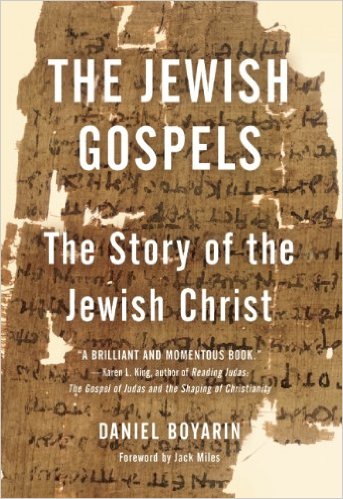
The episode I’d like to consider is found in Mark 7:
Now when the Pharisees and some of the scribes who had come from Jerusalem gathered around him, 2 they noticed that some of his disciples were eating with defiled hands, that is, without washing them. 3 (For the Pharisees, and all the Jews, do not eat unless they thoroughly wash their hands, thus observing the tradition of the elders; 4 and they do not eat anything from the market unless they wash it; and there are also many other traditions that they observe, the washing of cups, pots, and bronze kettles.) 5 So the Pharisees and the scribes asked him, “Why do your disciples not live according to the tradition of the elders, but eat with defiled hands?” 6 He said to them, “Isaiah prophesied rightly about you hypocrites, as it is written,
‘This people honors me with their lips,
but their hearts are far from me;
7 in vain do they worship me,
teaching human precepts as doctrines.’
8 You abandon the commandment of God and hold to human tradition.”
9 Then he said to them, “You have a fine way of rejecting the commandment of God in order to keep your tradition! 10 For Moses said, ‘Honor your father and your mother’; and, ‘Whoever speaks evil of father or mother must surely die.’ 11 But you say that if anyone tells father or mother, ‘Whatever support you might have had from me is Corban’ (that is, an offering to God)— 12 then you no longer permit doing anything for a father or mother, 13 thus making void the word of God through your tradition that you have handed on. And you do many things like this.”
14 Then he called the crowd again and said to them, “Listen to me, all of you, and understand: 15 there is nothing outside a person that by going in can defile, but the things that come out are what defile.”
17 When he had left the crowd and entered the house, his disciples asked him about the parable. 18 He said to them, “Then do you also fail to understand? Do you not see that whatever goes into a person from outside cannot defile, 19 since it enters, not the heart but the stomach, and goes out into the sewer?” (Thus he declared all foods clean.) 20 And he said, “It is what comes out of a person that defiles. 21 For it is from within, from the human heart, that evil intentions come: fornication, theft, murder, 22 adultery, avarice, wickedness, deceit, licentiousness, envy, slander, pride, folly. 23 All these evil things come from within, and they defile a person.”
Mark shows Jesus in controversy with Judeans (better than “the Jews”) from the party of the Pharisees over the traditions of the elders, that is, the extent and authority of the oral tradition. The Pharisees had a particular way of washing their hands prior to eating a meal. They accused Jesus of eating with defiled hands and urging his followers to do the same.
For many the critical point is Mark’s parenthetical remark: “(Thus he declared all foods clean.)”
This statement has been taken by many interpreters as the moment when the followers of Jesus thought he had done away with the distinction between kosher and non-kosher food. In other words, it was OK for Jesus and his Jewish followers to eat pig among other non-kosher foods (Leviticus 11). This reading, however, misses the point entirely. Jesus himself kept kosher. He did not abrogate Jewish law (cf. Matthew 5:17-20). The controversy was over how to observe God’s law, not whether to observe it.
The Pharisees who challenged Jesus represented a Jewish reform focused on purity. These particular Pharisees had traveled to Galilee from Jerusalem. Pharisees sought to convert other Jews to their way of thinking, even those who lived way up north.
Jesus’ unique form of Judaism was a conservative reaction against radical innovations in the law brought about by Pharisees and scribes in Judaism. The GMark reflects these stresses and strains. Jesus was not fighting against Judaism but within it.
Interpreters say Jesus didn’t keep kosher and permitted all foods to be eaten in clear violation of Torah. Therefore, Mark 7 represents the beginning of the parting of the ways between Judaism and Christianity.
Yet when the text says he declared all foods “clean”, this does not mean he permitted the eating of all foods.
There are a separate rules that define when a food is pure or impure, depending on how the food is handled and what it has come in contact with. Food becomes impure as a result of being touched by a person who is in a state of impurity.
This system of purity and impurity is different from kosher laws. No Jew is to eat pork. That is not the issue. Mark and Jesus know the difference even if interpreters do not. A part of the problem is the translation into English of “clean” and “unclean.”
Kosher is what can and cannot be eaten. Purity and impurity involve a separate category having to do with touching dead things, having skin diseases, some sort of bodily emission or menstrual impurity. Contact with an impure person can render food impure. Even kosher food that becomes impure must not be consumed by priests or any Jew who intends to enter the temple. No one wanted to enter the temple in a ritually impure state. Could food make a person impure?
Pharisees instituted a practice of ritual hand purification by pouring water over the hands before eating bread so the hands would not make bread impure.
Jesus challenges the Pharisaic practice and launches into a general attack against his opponents for missing the essential meaning of the law: foods that go into the body don’t make the body impure; only things coming out of us have the power to contaminate. So he rejects the Pharisees’ rules about purity not the Torah’s teachings on what foods were kosher and which were not.
The body is made impure not by taking in impure foods but through various substances that come out of the body. So Jesus challenges the Pharisees for the way they changed the rules of Torah (he relates this to how they changed the rules about caring for aging parents). Torah says only what comes out of the body contaminates, not the foods that you take in.
The traditions of the elders and other aspects of oral Torah followed by the Pharisees are man-made rules, human precepts taught as doctrine. The written Law on the other hand comes from God.
When Jesus is said by GMark to declare all foods clean, it does not mean he permitted all foods to be eaten by his followers. Essentially, he rejects the laws of defiled foods created by the Pharisees.
In the end Jesus did not sanction his Jewish followers to have bacon and eggs or a pepperoni pizza with extra cheese. He permitted the eating of bread without washing of hands (remember this has nothing to do with hygiene but purity). These are different matters entirely.
Nothing Jesus says should be taken as abrogating kosher law. Galileans as a rule had antipathy toward outsiders from Judea coming up and insisting they follower their innovations.
In my understanding of Mark 7 I have greatly benefited from reading Daniel Boyarin, The Jewish Gospels: The Story of the Jewish Christ (New York: The New Press, 2012). For more detail on this passage than I’ve been able to go into, see Boyarin.


 A Word in Edgewise
You must be logged in to post a comment.