Page 8 of 112

Broken Planet with Sharon Dirckx

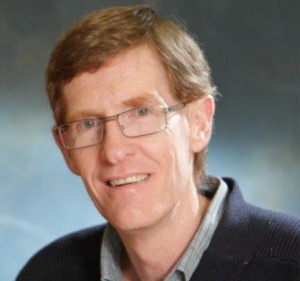
Dr. Sharon Dirckx

Broken Planet is the title of a new book by Sharon Dirckx (PhD, Cambridge) with InterVarsity Press (2023). The subtitle describes the question she hopes to address: If There’s a God, Then Why Are There Natural Disasters and Diseases?  She joins David Capes on The Stone Chapel Podcast to talk about her most recent book.

To hear the podcast (approx 20 minutes) click here.

Who is Sharon Dirckx, author of Broken Planet?

Sharon Dirckx is a freelance speaker and author who occasionally teaches courses for OCCA, The Oxford Centre for Christian Apologetics.  She has been with us before on this podcast and has lectured at the Lanier Theological Library in Houston in November 2022. Links to those episodes and to her other books are below.

While her PhD from Cambridge is in brain imaging, Dr. Dirckx has turned her attention to our broken planet. She and her husband live in Oxford, UK.

Are we living on a Broken Planet

A great deal of suffering is caused by natural disasters: tsunamis, earthquakes, floods, hurricanes, pandemics, and other catastrophes. How do we account for such disasters if there is a God who is all powerful?  Is our planet broken or is this the best of all possible worlds as some regard it?

It is one thing to make a case for the origin and impact of moral evil or “man’s inhumanity to man.”  But it’s quite another to talk about the planet itself as being our home and our nemesis.

Dirckx mixes her own style of apologetic argument with stories of people who suffered and survived to create a compelling book. This podcast captures a bit of her book and aims to help readers deal with those tragedies not caused by humans.

Click here to watch Sharon Dirckx’s lecture at the Lanier Theological library, on her second book, Am I Just My Brain.

Watch a short video here of Sharon discussing the topic, Can you be a credible scientist and believe in God.

For Sharon’s Podcast’s on her book, Am I Just My Brain, click here.

A Collection, Sunday, and Sabbath with Jon Laansma

In 1 Cor. 16:2, is Paul stipulating that funds be set aside “individually” or “at home,” and is there evidence here of a special “Lord’s Day” meeting of the church? Jon Laansma is Gerald F. Hawthorne Professor of New Testament Greek and Exegesis in the Classical Languages program at Wheaton College. He has authored articles on the Lord’s Day and Sabbath in the Dictionary of the Later New Testament and its DevelopmentsThe Encyclopedia of the Bible and its ReceptionEarly New Testament Apocrypha, and the Dictionary of the New Testament Use of the Old Testament (forthcoming, Baker).

To hear the podcast (13 minutes) click here.

“Ruth and Naomi: the vulnerable and marginalized” with Havilah Dharamraj

To hear the podcast (17 minutes) click here.

“Reading Ruth in South Asia” is the theme of a recent lecture at the Lanier Theological Library in Houston, TX (Winter 2023). David Capes, the Director of the library, sat down to talk with our lecturer, Dr. Havilah Dharamraj, on the Stone Chapel Podcast. 

The lecture was co-sponsored by Langham Partnership.

Who is Havilah Dharamraj?  Dr. Dharamraj has her PhD from the University of Durham. She is an Old Testament scholar and academic dean. In addition, she is the head of the department of Old Testament at the South Asia Institute of Advanced Christian Studies (SAIACS) in Bangalore, India. 

She is a Langham scholar whose reputation far and wide is extraordinary.  She is married and has two grown children.

Books by Dr. Dharamraj

Havilah is the author of two important books, the first Altogether Lovely: A Thematic and Intertextual Reading of the Song of Song (Fortress Press, 2018). It is part of a South Asian series in biblical theology. 

The second is Ruth: A Pastoral and Contextual Commentary (Langham Publishing, 2019). It is part of the Asia Bible Commentary. 

Here is what a leading Old Testament scholar has to say about the book:

“This a delightful commentary that deserves a wide readership. The authors combine solid exegesis with a warm and very readable style. Their exploration of the book of Ruth with Asian eyes reminds us Westerners how much closer to the world of the Bible others may be. The illustrative anecdotes from their own Indian world give this commentary a quality that is found in none other.”

Daniel I. Block, DPhil
Wheaton College, Wheaton, Illinois, USA

Reading Ruth and Naomi

In this conversation Dr. Dharamraj uncovers the message Ruth has for contemporary audiences.  Western audiences can hardly grasp the heart of it because western culture is so far removed from that of Naomi’s and Ruth’s time. But in South Asia, the plight of the widows, the childless, and women remains bleak.  

Ruth speaks in remarkable ways to our disposition toward the least of these and the vulnerable.  

To view the lecture featuring Dr. Dharamraj, go to our YouTube channel or click here. 

If you’d like to watch the panel discussion from the lecture weekend, go to our YouTube channel or click here. 

To learn more about Langham Partnership US click here.

If you’d like a transcript of this podcast, click here.

Want more Stone Chapel Podcasts? click here.

For upcoming lectures at Lanier Theological Library, click here.

Hebrew Prepositions and God’s Image with Carmen Imes

The Hebrew preposition usually translated as “in” in the phrase “in God’s image” repays a closer look. It has to do with our identity, what and who we are. Dr. Carmen Imes (Ph.D., Wheaton College) is Associate Professor of Old Testament at Talbot School of Theology at Biola University. She has published several works including Bearing God’s Name: Why Sinai Still Matters, and hosts her own YouTube channel where she releases weekly “Torah Tuesday” videos. Her next book will be Being God’s Image: Why Creation Still Matters (2023).

To hear the podcast (10 minutes) click here.

Hospitality with Vuyani Sindo

Rev. Dr. Vuyani Sindo is Head of Biblical Studies at George Whitefield College, Cape Town, South Africa. In an earlier episode of this podcast he discussed the translational choices of English “liberty” or “right” in 1 Cor. 9:4-5. Today’s topic is hospitality, or “love” of the “stranger.” This is the expectation of church leaders and all believers that, at cost to ourselves, we turn someone we might be afraid of into a friend. In so doing, we come to know each other and are equipped best to care for each other.

To hear the podcast click here.