Page 6 of 112

What does “Scripture Alone” Truly Mean? with Ben Witherington III

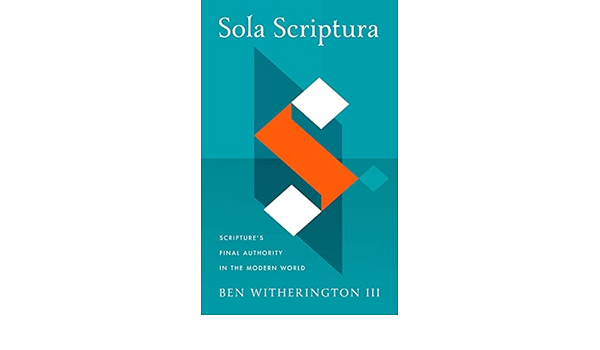
Ben Witherington’s new book is Solo Scriptura: Scripture’s Final Authority in the Modern World. It was published recently by Baylor University Press. The ‘Big Idea’ of the book is that the Bible has been the final authority for the church from the beginning, but exactly what does that mean?

Who is Ben Witherington III?

Ben Witherington III is the Amos Professor of New Testament for doctoral studies at Asbury Theological Seminary. And he’s been teaching there for the last 28 years. He has made a big impact on several fields of NT studies.

Today on The Stone Chapel Podcast we talk with Ben Witherington. We learn about his educational journey that took him to many unexpected places. He learned from some of the great theological minds of our age. .

And he gives us insight into his new book and it’s impact on today’s world.

To hear the podcast click here.

Why Read the Bible in the Original Languages? with Takamitsu Muraoka

In this episode, Professor Takamitsu Muraoka, who was born in Hiroshima, Japan, in 1938, narrates his life’s story with an eye on how the biblical languages came to be of such importance to him. Following his conversion and years of academic preparation, he taught at Manchester University and Melbourne University, before becoming Professor of Hebrew at the Leiden University until his retirement. He founded the Dutch-Japanese-Indonesian Dialogue against the background of the Pacific War and is Representative of The Japanese Language Biblical Church in The Netherlands. In 2017, he was awarded the British Academy’s Burkitt Medal for Hebrew Bible studies, in recognition of his outstanding contribution to the study of Hebrew grammar and syntax and the Septuagint. His many publications include A Syntax of Septuagint Greek,  A Greek-English Lexicon of the Septuagint,  A Grammar of Qumran Aramaic,  A Syntax of Qumran Hebrew, and Why Read the Bible in the Original Languages? 

Learn more about related programs at Wheaton:

M.A. in Biblical Exegesis: https://bit.ly/46OMTHR

B.A. in Classical Languages: Greek, Hebrew, Latin: https://bit.ly/3FkLEV4

To hear the podcast click here.

The Jesus Revolution in Nashville

David Capes and Travis Mulder from the Lanier Theological Library recently traveled to Nashville to sit in on a filming session of Don Finto by filmmaker, Terry Benedict, and Gary Glover. 

This filming is part of a project sponsored by friends of Don Finto to commit their former pastor’s life and sermons to film and digital audio. 

During lunch, Terry and Gary sat down with David to talk about the Don Finto Project on The Stone Chapel Podcast.

To hear the podcast click here.

Who are Terry Benedict and Gary Glover? 

Terry is a filmmaker from Los Angeles.  He’s known best for the documentary The Conscientious Objector. This documentary became the basis of the Academy Award winning film Hacksaw Ridge

Gary Glover and his wife have been magazine publishers in Nashville for many years.  He has an online company called SongWriting University (www.songwritingu.com). This company allows anyone in the world to be teamed up online with a Nashville songwriter to write a song.

Gary grew up in Nashville and attended Lipscomb College (now Lipscomb University).  This is where he came under the teaching of Don Finto. 

So extraordinary were Finto’s accomplishments that nearly 50 years later, other students of Don have teamed up to commit his life, ideas, and sermons to an archive of resources.

The Jesus Revolution & Don Finto? 

Don Finto was and continues to be one of the most influential pastors of his day.  His church, Belmont Church, is located on Music Row in Nashville. 

In the 1970s, 80s, and 90s he and his congregation experienced the Jesus Revolution in Nashville. This was the same time when pastor Chuck Smith and Calvary Chapel experienced this spiritual phenomenon in Southern California.

It’s not too much to say that much of the contemporary Christian movement was birthed at Belmont Church under the leadership of Don Finto. Artists such as Amy Grant and Michael W. Smith launched their careers there in the heart of Music City. 

Finto’s influence did not stop in America.  He treks all around the world with the gospel message and the heart filled with grace. Even in his 90s, Finto tells people half his age to “finish well.” 

What is the Finto Project? 

The Don Finto Project begins with recording in high definition the ideas and stories of Don Finto “in his own words.”

Students and friends of Finto including Mark Lanier and Gov. Bill Lee (Tennessee) are sharing their insights. In the next phase, Terry Benedict will produce a 90-100 minute documentary on Finto’s life. 

In addition, Don’s sermons and writings are being collected to create an archive about Don’s legacy.  These will be include in an online digital archive available for generations to come.   

You can read a transcript of this podcast here.

For more resources check out these links.

To hear Don Finto’s lecture at the Lanier Library click here.

For a copy of Don Finto’s book, A Handbook for the End Times, click here.

Want more Stone Chapel Podcasts on some great topics? Just click here.

What’s more, you can get information on upcoming lectures at Lanier Theological Library by clicking here.

The Visual Museum of Women in Christian Art

Sandra Glahn

Lynn Cohick and Sandra Glahn recently joined David Capes on The Stone Chapel Podcasts to talk about a new initiative and project, The Visual Museum.

Dr. Lynn Cohick is Distinguished Professor of New Testament and Director of the Houston Theological Seminary at Houston Christian University.  Dr. Sandra Glahn is Professor of Media Arts and Worship at Dallas Theological Seminary.

To hear the podcast click here.

What is the Visual Museum?

This project began with Sandra Glahn taking students to Europe to study medieval art and spirituality.  What she and her students noticed in the artwork were images of women taking on leadership positions in the church. 

Often the written record does not tell much about this, but the art does.  It is a lost part of the church’s history. 

So, Sandra, Lynn and her team have created a website to tell that part of the story.  You can find it in Beta version at visualmuseum.gallery

Lynn Cohick

Women in art and the early Christian church

Not only do you see good quality images of this artwork, you also are introduced to the stories of these remarkable women. 

Not all can be identified, but the art is clear in representing women at high levels of leadership. Now this is true not only in the medieval era; it was evident in earlier centuries as well. 

The Visual Museum is about gathering these images and telling these stories.  Others who are traveling to Europe are taking photographs and doing some research for them. 

Students are researching and writing.  In addition, to learning something of art history, they are learning about their own history.  Make sure you hear the two touching stories at the end.

More Resources

Lynn Cohick (with Amy Brown Hughes), Christian Women in the Patristic World: Their Influence, Authority, and Legacy in the Second through Fifth Centuries (2017)

Sandra Glahn, Nobody’s Mother: Artemis of the Ephesians in Antiquity and the New Testament (2023)

To hear the podcast click here.

For a transcript of this podcast, click here.

More resources

Want more Stone Chapel Podcasts on some great topics. Just click here.

What’s more, you can get information on upcoming lectures at Lanier Theological Library. Just click here.

Christ among the Messiahs with Matt Novenson

Matthew Novenson joined David Capes on The Stone Chapel Podcasts to talk about his important book, Christ among the Messiahs: Christ Language in Paul and Messiah Language in Ancient Judaism (Oxford University Press).

The book has made a big contribution to the study of Christology in the earliest years of the Jesus movement.  Though it has been out ten years, it is worth sharing with a new audience. 

Who is Matthew Novenson? 

Matthew is originally from Tennessee.  He now serves as the Professor of Biblical Criticism and Biblical Antiquities at the University of Edinburgh. 

Christ among the Messiahs 

For many years some scholars have regarded the word “Christ” as just another name for Jesus in the earliest writings of the New Testament, namely, the letters of Paul.  But Matthew makes a convincing case that the word “Christ” in Paul means “Messiah.”   

This may seem to some only natural, but it is a momentous thing.  It involves a whole new reassessment of Paul’s language and his Jewishness.  

We find messiah language in various places like the Old Testament, Paul’s letters, the Dead Sea Scrolls, and other second temple Jewish texts. 

Novenson often employs the word “honorific” as a noun to discuss Paul’s use of “Christ” in his letters.  It comes from the discipline of “classics,” namely, the study of the ancient Greek and Roman civilizations. 

Honorifics are like titles in a way but they were intended to magnify the name of the person. The most famous is Caesar “Augustus.” 

The idea that “Christos” as it referred to Jesus is not limited to name or title.  There is a third way, an honorific.

Novenson has done a great deal to shape the field of New Testament studies with this and other books.  

Other Books by Matt Novenson

Paul: Then and Now (Eerdmans)

The Grammar of Messianism: An Ancient Jewish Political Idiom and Its Users(Oxford UP)

For a transcript of this podcast, click here.

More resources

Want more Stone Chapel Podcasts on some great topics. Just click here.

To hear the podcast (22 min) click here.