
Staying Christian in College
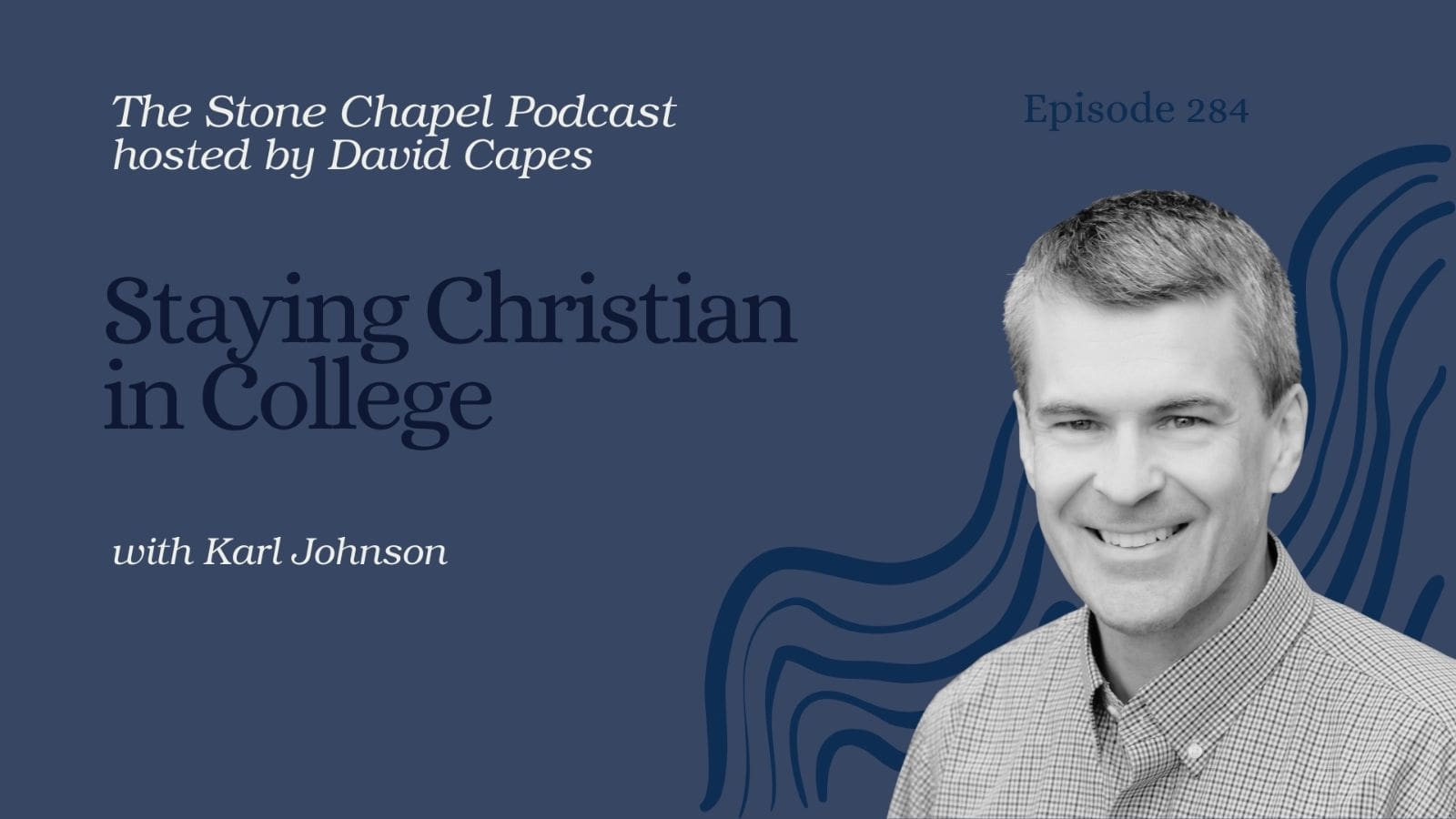
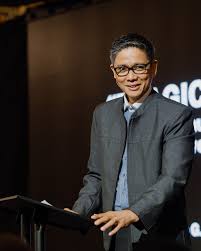
Here is a transcript of my conversation with Karl Johnson. You can hear the podcast here.
This transcript has been edited for clarity and space.
Carl Johnson
This is Carl Johnson. I’m the Executive Director of the Consortium of Christian Study Centers.
David Capes
Dr Carl Johnson, good to see you. Welcome to The Stone Chapel Podcast.
Carl Johnson
Thank you. It’s great to be here with you, David.
David Capes
We are here face to face, and that’s always better. I like it when that happens. We’re going to talk about Christian study centers here in just a few minutes. But before that, let’s talk about you. For those who don’t know you, who is Carl Johnson.
Carl Johnson
Well, a brief way to put it is, I am an accidental Christian educator. I never, never imagined I would be doing what I’m doing now. I’m from the metro New York area. I went to Cornell University, and I had a career in outdoor adventure education. So, I was teaching rock-climbing, white-water paddling, back country travel, wilderness medicine, climbing big mountains internationally. And it was great. I mean, who doesn’t enjoy that sort of thing, right? But somewhere in my 30s, I was at the university, and I got to thinking, the university can hire somebody else to do what I’m doing here. I also have this itch to start a new kind of organization that bridges the gap between the church and the Academy and brings a Christian intellectual presence to the secular university. The university is not going to hire somebody else to do that. And so ,I need to do it.
David Capes
So you were the guy. It sounds like you sensed a call.
Carl Johnson
Yes. I sensed a call. Pulled together a group of pastors and professors. I said, here’s what’s burning in my heart. I don’t know if it’s a crazy idea or not. What do you all think? And they said, we think we should do it. This was back in the late 90s, early 2000s.
David Capes
There are a lot of people today who are concerned about what’s happening in higher ed. And particularly if they send their sons or daughters off to places like Cornell, will they come back with any faith intact at all, or will it be dashed on the rocks.
Carl Johnson
Yes, this is a question that people have been asking me for about 25 years or more. There’s not an easy answer to that. There are real challenges with secular universities. I think we want to steer a middle course between not underestimating these sorts of concerns, but also not overstating them. Probably the most important thing I can say, is that right now, I think it’s actually a better time to attend secular universities for Christian students than a generation ago.
David Capes
Really now, why do you say that?
Carl Johnson
There’s more vibrant Christian intellectual activity on many of our campuses and more resources. And I think part of the change is this. A few generations ago, the difference that it made being a Christian on a campus where there was a greater cultural consensus around certain sorts of issues, the difference wasn’t as stark. Then you get into the post 60s. That’s when those who were in graduate school in the 60s became professors say, in the 80s. That might have been a kind of peak secular moment around that time.
But then in the 90s, Christians start finding their voice, their scholarly voice. And there’s a whole renaissance of Christian scholarship and philosophy and history that began trickling over to other disciplines. Christian professors start having fellowships and organizations where they’re convening association of Christian economists and so forth, where they become more comfortable speaking in a Christian voice. Now you go to some campuses, and you have not just the traditional campus fellowship ministries that have been there for a long time, but you also have on at least three dozen campuses now, these Christian study centers. Which typically have a building that provides a physical hub for the Christian community on campus. And you’ve got students involved in all those fellowships, coming and going, coming and going with the door swinging thousands of times a week. Some of them even have residential facilities.
There’s this visible hub of Christian intellectual activity on these campuses. And there’s speaker series that are coming in monthly or more. Christian professors, some from Christian colleges, some from other secular universities, Veritas Forums and other events that are just giving students plenty of reason. A generation ago, students would go to campus and they have this crisis of faith. Oh, it looks like all the smart people here, all the professors and most of the other students are not believers. And it’s just not like that anymore. Now, there’s so much visible Christian intellectual activity on many campuses, though not on every campus. So, I say it’s actually a better time than it was a generation ago.
David Capes
That’s great to hear. When you “heard” this call was the Christian Study Center movement up and running?
Carl Johnson
Not really. When this idea started burning in my heart there were important intellectual questions that it’s hard to get an answer for either from the church or the university. Because pastors are very busy with other sorts of things or because the university is often just so secular and the faculty members, frankly, are so very specialized that they often are not very well equipped to deal with broad questions of meaning and purpose in the good life.
But these things were burning in me and I started talking to people. Finally, somebody said, you should take a look at what’s happening in Charlottesville, Virginia, because there’s this thing there. It’s called the Center for Christian study. And so, I wrote a letter to the director, and he wrote back, sent me some of their materials, and I saw what they were doing with this public speaker series. I thought, wow, that’s incredibly exciting. I want to do something like that.
And at the very same time, I drove from Ithaca down to New Haven for one of the very first Veritas Forum events. And I heard this whole lineup of speakers that included people like N. T. Wright, who at that time nobody had really heard of. He was a much younger guy at that time, as we all were, and so I got this vision of Christian scholarship. I pulled together these pastors and professors, and I said, hey, let’s do something. Let’s create a new organization and bring in visiting Christian scholars.
But at that time, we’re talking late 90s, early 2000s there was really only one very well established Christian Study Center in Charlottesville. And then there were, a few other very fledgling centers. And so, I started one at Cornell. At that time, I would say, in the early 2000s there was one big center and a handful of others. And in 2007 I invited all the folks I knew doing similar work up to Ithaca for a long weekend. We put our heads together, and we’ve resolved to form what is now the consortium of Christian Study Centers. And in our first year, we had half a dozen member centers.
2008 was when we incorporated. The first little get together that I referred to was in 2007 and in 2009 we’ve got a full-time director, Drew Trotter. Over the years, we’ve grown from that original half dozen member centers to now three dozen, and we’ve got another dozen that are in the startup phase.
David Capes
The goal is to be on secular university campuses, right?
Carl Johnson
That’s the concept, yes.
David Capes
How does your organization exist alongside of InterVarsity and maybe the Catholic Newman Centers and those kinds of things?
Carl Johnson
What we’re seeking for is a very collaborative relationship with the campus ministry ecosystem. And I’ll just use a concrete illustration of what that can look like in practice. When I was on the Cornell campus working in outdoor education back in the 90s, there were probably a dozen or more campus fellowship organizations, and they would occasionally bring in a visiting speaker, and I would sometimes go to hear the speakers. They would usually have 30 or 40 students in attendance, because it was just the students in that organization that would come to hear the speaker. I started networking with the campus minister saying, hey, let’s work together. If one of us is going to bring in a speaker, let’s all co-sponsor and make it a campus wide event. We started doing that, and the attendance increased tenfold. We started getting 300-400 people showing up at events. And it wasn’t really rocket-science. All these students were already there on campus.
David Capes
It was just a matter of using a university facility.
Carl Johnson
Yes. We’re on campus for these events. Part of the origin of the center that I started was, in fact, collaboration. That’s part of the DNA of the organization. And now that most of our centers have buildings, we try to let our buildings be a resource that helps all those other organizations advance their mission and their ministry. We have libraries that are available for them to use, whether it’s for Bible study prep or something else. We have meeting space for them to use, which is increasingly important, because some organizations are actually getting kicked off campus, and it’s harder to have access to space on campus for certain ministers. Providing a space, you know, is a value. We like to say, we gather, we serve and we unify the campus ministry organizations on a weekly basis.
David Capes
What would the ministry look like on a weekend when you don’t have a big speaker? Are students coming and going and are there other meetings going on? How does that work?
Carl Johnson
Yes, t varies a little bit from one campus and one center to another. Many of our centers now have what we call fellows programs. These are cohorts of students that commit to meeting together over the course of usually a semester or a year to go through some sort of a great books type curriculum. They are reading certain books and articles together and discussing them. So it might be every Sunday evening or every Monday evening for a semester or for the year, and some of our centers are now sufficiently built out that they’ve developed that curriculum over not just two or three years, but even four years.
It really ends up adding up to something like a Christian liberal arts education that’s getting layered on top of whatever their major is. And many, many, many students these days are in the STEM disciplines, right? And we’re at a lot of state universities. There are big engineering schools and whatnot. My own son is at Cornell, studying engineering, and he’s involved in the center there, and he’s getting a pretty good liberal arts education layered on top of his technical training. So, the Fellows program is a key aspect of what we do, because there’s sustained, ongoing, formative impact on the students.
But then there are other sorts of discussion groups and movie nights that might be one off sorts of things we do, a lot of public reading of Scripture events on some campuses. My successor at the Cornell center does this thing every fall where he gets some food trucks and they read an entire Gospel, say the Gospel of Mark out loud, out on the patio. And they’ll have over 100 students come and just sit just in silence while they listen to the entire book of Mark being read out loud.
David Capes
It’s like the way Mark wrote it, not verse by verse, but the whole thing.
Carl Johnson
Right, exactly! It’s almost like this ancient monastic practice that’s getting reincorporated into the modern secular universities, with food trucks.
David Capes
I love it. That’s exciting. You’re heading off to Singapore. Is this becoming an international thing, or is it mainly North America? What’s the geographic?
Carl Johnson
Yes, I am. It’s mainly North America. I get a fair number of calls and inquiries from folks in other countries, and there are a few fledgling Christian study centers in other countries that are modeled after what they see happening here in North America. There are challenges to getting these centers established in other countries. One aspect of that is financial, and then there’s also just networking kinds of challenges. But there’s a lot of interest out there.
I’m going to spend an entire week in Singapore, and the purpose of the visit is three-fold. There’s a lot of Christian families in a place like Singapore who are sending their children to the United States for higher education. They’re asking the same kinds of questions that you were asking earlier. What happens if I send my kids to these institutions? What are the opportunities there? How concerned should I be? I’m going over to let them know what the landscape looks like here and what the opportunities are.
But then the other part of it is to let them know more about this model and to let them figure out what if any implications it may have for their local context. For example, in Germany, there’s now several of these small Christian study centers. And one of the reasons is precisely that the theological seminaries are not flourishing. As they shrink and die, the Christians who are there are very concerned about what is the future of Christian education in our country? And where can we provide theological training for future pastors as well as lay persons? And so the question arises, well, where are the students? And in almost every country these days, the answer is, they’re at the state funded universities. That’s where the overwhelming number of students are, and so it makes sense for Christian organizations to essentially set up camp where the students already are and to provide some education and training opportunities right there.
David Capes
So a freshman student arrives on campus in the fall. How does he find you?
Carl Johnson
Well, these days, if they’re looking, it’s not hard. With all the online searches, an awful lot of the students will find these centers before they arrive.
David Capes
So they already know it exists.
Carl Johnson
Exactly. It’s not that hard. Many of the centers also run a 24- or 48-hour pre-orientation retreat, so that students can actually arrive a day or two early. They might be in a group with anywhere from a couple dozen or even more than 100 other students that they can get to know so they have some semblance of Christian community with other students in their class before orientation kicks in. But we can also mix in some upper-classmen Christian students to provide them with a little bit of here’s how life works at this university. We bring in a couple of Christian faculty members to give some brief talks. Yes, there are Christians here on the faculty, even though we don’t always speak in a Christian voice. So you might not know that, but yes, we’re here. We bring in a few pastors to give some short talks, to let them know about their local churches, and extend an invitation to join them for Sunday worship. And so by the time orientation begins, the incoming students have met other fellow first year students, upper class Christian students, Christian faculty members and local pastors.
David Capes
That’s a great strategy. This is bound to cost a lot of money. I’m thinking about the buildings right next to a place like University of Virginia or Cornell. How is all this funded?
Carl Johnson
Mostly from alumni, parents secondly, and there’s occasionally, a few foundation grants that will help with a particular project, here and there. But it’s individual donors, mostly alumni and parents. And it’s not impossible to kick things off in a very bootstrapped kind of a way. That’s certainly the way I did things, back in the day. And we would just have faculty members and parents doing talks on faith and vocation, and I would interview them, and students would come out and listen. You do what you can with the resources that you have.
But yes, it’s true, especially once you get into buildings, it requires a lot more resources, millions of dollars, to be sure. One of the reasons, among others, that I’m enthusiastic and even bullish on this movement is precisely because there’s a business model that works pretty well. One aspect of that is that, depending on the building you have, the buildings themselves can generate revenue. The ministry that I started, we purchased two large Greek houses that each have about 20 residents, so now we have 40 residents paying rent to the ministry. And we purchased the building outright with money that was donated. And we don’t pay tax, because we’re a non-profit organization, so we’re not paying property tax.
So all of that revenue is funding ministry staff who are ministering to the student residents. You know, it’s what I tell the donors. It’s like a double return on investment. Because if you put all that money in an endowment account, you put a million dollars in an endowment account. You might get $80,000 a year, or something like that. Now we get that much money in rent for every million dollars of equity in the house, and that rent is going directly to support the staff who are serving the students who are living in the asset. It’s really a remarkable model. And then some of the centers have commercial real estate. In Florida, there’s this very, very well built out coffee house, Pascal’s Coffee House as part of the Center at the University of Florida in Gainesville. Up in Minnesota, Anselm house, they’ve purchased a building that has 70,000 square feet, and the majority of it is rented out to commercial organizations that are paying rent supporting the ministry. So there’s all kinds of opportunities here, I think, even on the building front, for the ministries to become sustainable as a byproduct of getting into real estate.
David Capes
That’s an exciting kind of project that you’re helping to lead right now. You estimate that there are about three dozen centers. Do you see that growing?
Carl Johnson
Absolutely. I get more inquiries all the time. In the month of December, I think I received about 10 inquiries through our website from people saying, I would like to start a study center on such and such a campus. I received another one yesterday. I mean, these things are coming in as fast, almost faster than we can respond to them. It’s really incredible. But there are very healthy startup efforts at UCLA, in particular right now. It’s one that I’m watching. We have inquiries from some other well-known universities, and then there are some other universities that are not as well known. But that’s one of the signs of the spread of the movement, is it’s not just the campuses with 1000s of students and big resources and big recognizable names. Sometimes I get inquiries from institutions, and I have to look them up to see where they are. I’m not familiar with them, but you know, the persons inquiring have been exposed to the movement at one of the larger campuses.
David Capes
I think parents who hear this, grandparents who hear this, might be encouraged and not so discouraged from sending their sons and daughters, grandsons, granddaughters, off to a well-known university because they know that they can find Christian community, Christian Fellowship, Christian teaching, and maybe even almost like a liberal arts degree in Christian theology there. This is a great movement’
Carl Johnson
I’ll say, for the record, I want it to be known. I’m a huge fan of Christian colleges. My wife, Julie, and I have five children, we sent three of them to Christian colleges and two of them to secular universities. When people ask me, what’s the better route to go, my answer is, there is no one right answer. It depends on the child, their interests and the opportunities that are before them.
We’ve had students come to some of the universities where we have centers, and they said, well, actually, my first choice was a Christian college, but I got so much more financial aid here that I didn’t really have a choice. I had to come here. But now that I’m here, I’m happy that I’m here, because I didn’t know there were all these opportunities for Christian learning here. But the bottom line, reality is that approximately 80% of students from Christian homes and families attend secular universities. That’s just the way the numbers work, and so I think it’s important in the broadest sense of church strategy. If we want to serve the next generation, we need to be thinking about, what are we doing for the Christian students at secular universities. And of course, it’s not just the Christian students. I mean, we’re doing a lot of public events as well.
David Capes
Some non-Christian students become Christians. I’ve talked to so many people who became Christians in college.
Carl Johnson
Absolutely, it’s a very incredible time.
David Capes
And a lot of that has to do with movements like the Christian Studies Center Movement.
Carl Johnson
Yes, absolutely.
David Capes
Carl Johnson, thanks for being with us today on The Stone Chapel Podcast.
Carl Johnson
Thank you, David.
Description
TSCP 284 Staying Christian in College with Carl Johnson
Many parents (and grandparents) are concerned to send their sons and daughters off to secular colleges because they may lose their faith. But Carl Johnson, Executive Director of the Consortium of Christian Study Centers, thinks this is a good time to send them to them to certain elite universities. Why? Well keep listening and you’ll find out.
The Stone Chapel Podcast is part of the Church Leaders Podcast Network.
For more information about the Christian Study Centers see their website: https://cscmovement.org/
The Stone Chape Podcast is created and produced by the Lanier Theological Library and Learning Center in Houston, TX.
 A Word in Edgewise
You must be logged in to post a comment.