What follows is the transcript of a conversation I had on The Stone Chapel Podcast with Dr. Gene Green about his wonderful book, VOX PETRI. Peter, he says, is the lost boy of Christian theology, particularly with the Protestant Church.
To hear the podcast, you can go to your favorite platform or click here.
Episode 132 Vox Petri with Gene Green.
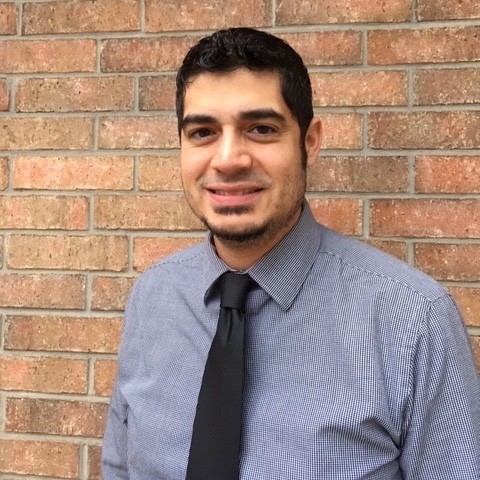
Gene Green
I’m Gene Green. I’m Professor Emeritus of New Testament from Wheaton College and Graduate School in Illinois, and also currently adjunct professor at NACOS, the Native American Course of Studies of The United Methodist Church.
David Capes
Dr. Gene Green. Gene, good to see you. Welcome to the Lanier Theological Library and to the Stone Chapel Podcast.
Gene Green
Well, it’s a delight to be here. And it’s such a beautiful place and beautiful day here in Houston, Texas. And I’m grateful for the weather.
David Capes
Well it’s cooler than usual, but I’m sorry.
Gene Green
I brought the weather f. Blustery.
David Capes
The Lanier Library is a delightful place. I know you haven’t seen much of it. But after this weekend, you’re here for a lecture weekend. Hopefully, you’ll get a chance to see a little bit of all of it.
Gene Green
Well, I hope so. And the library is just a beautiful place a marvelous collection of books. And I’m sure that many many scholars are wanting to come here if they haven’t already come to do some research. And may I say probably they’d want to ride the small gauge train around the property as well.
David Capes
So, for those who don’t know, who is Gene Green?
Gene Green
Well, I’m a New Testament prof. Taught for about 13 years in Latin America and the Dominican Republic and Costa Rica. I spent about 24 years at Wheaton College, teaching New Testament and have done some academic administration—crossed over to the dark side of the academy. But my real joy is being with students and teaching and writing, to be able to think through in fresh ways, some issues in Scripture and theology. It’s been quite a joy. The experience in Latin America brought me pretty deep into the conversation with our brothers and sisters who are developing Latin American theologies, and that was extremely enriching. I have had the honor of working not only with Latin Americans, but also women and men from across the globe, from Africa, Asia, Latin America, as well as in indigenous communities and listening to the theological conversation. This cutting edge conversation, Justo Gonzalez said, is a macro-reformation in Christian theology that’s happening around the globe.
David Capes
And it’s really exciting.
Gene Green
It really, really is, as our brothers and sisters are bringing us fresh and faithful visions of the faith that are enriching us all, not only for their communities, but for all Christians, every place. And here in North America, we need to be listening to them as we listen to our brothers, like Peter. And as he’s developing theologically, in his context, also, we’re seeing tremendous developments in these various regions of the world. So, that’s what I’ve been up to. Currently, I’m writing a commentary on Acts for the Tyndale series, and just having a great time.
David Capes
Good. Well, we’re so pleased that you’re here. We’re here today to talk about your book that was published a couple of years back, called Vox Petri, A Theology of Peter, foreword by Michael Gorman, a good friend of ours. But “Vox Petri”, “the voice of Peter,” is that a good translation?
Gene Green
Yeah, his voice that said, we use the title Vox Petri to talk about the way that the New Testament gives us the, not the ipsissimia verba, the exact words of Peter, but the voice of Peter. Peter is always mediated to us in the various witnesses in the New Testament. So, there are others that are managing his voice. So, it’s the voice of Peter, but I think we have a faithful picture of who Peter is. But my concern has been over the years with the way that the New Testament presents the theology of Peter. And we have to remember that Peter was the Rock, and ‘upon this rock, I’ll build my church’.
David Capes
I would love to have some sort of a study done with Protestant ministers, to say how many of you are preaching on Peter. I bet not too many. I mean, we’re “all in” for Paul. We’re sort of “all in” for Paul. And maybe the Gospels. But there’s a huge part of the New Testament that we stay away from, I’m afraid, some of that’s the reaction to the Catholicism in terms of how they view Peter, right? We don’t want to do that. We don’t want to go that far. So, in a way we play him down.
Gene Green
We do and, in the book, ‘Vox Petri, Theology of Peter,’ I start off by talking about Peter being the lost boy of Christian theology and we’ve lost him, we lost him in the Reformation. We think, well, Protestants, we’ve got Paul and Roman Catholics have Peter, we’ve lost him in the pulpit. When you think about the preaching we’ve heard about Peter, you know, he’s the disciple who fails and is restored. you know, he rejects the idea of the cross. Jesus rebukes him for that, he denies the Lord, he walks on water and he sinks. He and Paul have a bit of conflict in Antioch. And we think about him as the failed but then restored disciple, so we lose him in the pulpit, as a theological figure, we’ve lost him to critical scholarship.
Our colleagues who do not believe that you can hear or reconstruct a theology of Peter from the New Testament sayt all we have are images of Peter, instead of the authentic voice of Peter, the authentic theology of Peter. So, the problem with Petrine and studies is very similar to Jesus studies, where you bifurcate between in Jesus studies—the Jesus of history and the Christ of faith—with the Christ of faith being the invention of the church. Well a similar thing happens in Petrine studies. Now, you have the Simon of history. And then the Peter of faith. And most who work on Peter say, really, all we’ve got are just images of Peter, but not Peter himself. And my argument has been that no, the Simon of history is the Peter of faith, and we can hear him. We can hear him in the New Testament.
David Capes
Yeah, and I love the way you bring in the Gospel of Mark, at a very early part. Tell us a little bit about that. Why Peter is not the one speaking necessarily, but he is speaking through Mark.
Gene Green
Yeah, there’s the church father, Papias, who talks about the gospel of Mark being the anecdotes of Peter. And that Mark was Peter’s translator. Now for many years, people didn’t think that that was really a faithful statement. But scholars such as the late Martin Hangul and Richard Bauckham, and others have said, No, we believe that Papias’ testimony is correct that that Mark was Peter’s interpreter. And basically, from Papias, we understand the gospel of Mark was Peter’s preaching, translated and formed into a gospel. But it’s interesting. Papias also says that, the gospel of Mark is not “in order,” in order which doesn’t mean chronological or logical order. But it was language that was used at the time to talk about a literary production. This is not a final, polished literary production. Whereas Matthew, for example, is in order, which means that it’s a final edited edition. So, there’s something rough; I mean, we teach Greek, we speak Greek-well we read Greek. And we know that the Greek of Mark is not the best of the New Testament. There’s something rough about it. But this is the first telling of the Jesus story. And then we have Matthew and Luke, at least according to one school of thought, that are using this gospel, which is really in some ways an inferior literary production. And the question is, why did they use it? If it wasn’t the best, and I think it’s because Peter, is behind it. He’s just amazing. Now, you know, what started me off on the study was the recognition that the New Testament witness about Peter always puts him in the first place. He’s the first disciple chosen, he’s the first to walk on water and sink, but he did walk on water, not something you and I have done recently, and he’s the first one to confess that Jesus was the Christ. Yeah, he was the first to deny the Lord but he was the first to be restored. Go tell my disciples and Peter. He was remembered as the first witness of the resurrection, the women were there first. But he was remembered by the church as the first Apostolic witness to the resurrection. First leader of the early church, I’m working on Acts right now-there’s Peter. Yeah, right at the beginning, and the first one to open up the mission to the Gentiles. And the first one to defend Gentile inclusion without conversion to Judaism without having to be circumcised. So there’s something there’s a Petrine primacy, in the New Testament.
David Capes
And there’s deference in Paul’s language, too, for Peter? There’s some little bit of a struggle going on there and Galatians 2. There’s still a deference in that a Peter extended to me the right hand of fellowship, he affirmed my gospel.
Gene Green
Right, and so Peter has a much more prominent place in the early church than we recognize. And the argument that I’m trying to build is that that primacy wasn’t just about leadership in the church, but it was about theology as well. I think that Peter is foundational for Christian theology.
David Capes
So, is Peter the first theologian, in a sense? I mean, Paul’s literary output is much greater, and he was first.
Gene Green
I like to wind up my Pauline scholar friends by saying that Paul is derivative of Peter. And when you think about Peter’s story about Jesus, I mean, he was the one that recorded what we know or remembered. What we know as Mark 10:45, the Son of Man did not come to be served, but to serve, and to give His life a ransom for many. And here he’s bringing together obviously, teaching from Jesus, but mediated through Peter to Mark and then in our Gospel. So, our basic understanding of what the cross is all about. Where does it come from?
David Capes
As a Protestant, they would go to First Corinthians, they would go to Galatians. Right? We almost always go to Paul.
Gene Green
Yeah. And it’s really Peter, who is giving that first testimony. And in Galatians, Paul says he went up and interviewed Peter, he talked to Peter and I don’t think they just sat around and had a cup of mint tea. Or talk about the weather. But where did Paul get his full understanding of the Jesus story? So we find that there’s not this type of old Tubingen school, two wings of Christianity, Pauline and a Petrine. You know Martin Goulder, in a revival of that. No. There was a right hand of fellowship between them. So there is harmony.
David Capes
There’s tension in every human relationship too. So sure, these guys are not infallible completely.
And you know, a similar case been made for James but other people as well that James is much more significant figure that we don’t totally ignore, right, but we don’t spend a lot of time with it. So, is there anything unique about Peter’s theology compared to let’s say, Paul, or John or Matthew?
Gene Green
Exactly. That Petrin primacy. That’s there. He was a more important figure in Christian theology than we dare realize.
David Capes
Yeah, he is certainly an influencer. At the very beginning, isn’t he of all this. Now, let me let me ask this. Beyond the New Testament, there are a number of books like the acts of Peter and the acts of Paul and Peter and the apocalypse of Peter and the Gospel of Peter right? There are these other books. Do you include those in your book, Vox, Petrie?
Gene Green
To answer that, let me read to you a little bit from ‘Vox Petri, Theology of Peter’. And this is at the end of the book, “Peter and the Foundations for Christian Theology’. And I think that’s the point of this book, that Peter is foundational for our full understanding of the faith. Let me read “Peter was the first to tell the story of Jesus as a narrative whole, the first to identify Jesus as the Messiah, and the first to explain the meaning of the cross of Christ. He developed his theology on the road, in the face of opposition, offering the church a theology of suffering and glory. He stood to the very beginning of Christian understanding of the inclusive nature of God’s saving work through Christ, the Jews and the Gentiles together. All people, both Gentiles and Jews have a place in God’s plan. The Apostle lifted the church’s eyes in hope to the final consummation of all things, when God’s act of restoration would be complete.” All that is very familiar. And that’s the point and that was a surprise. That when we take a look at Peter and his theology it’s not that it’s unique. But the beauty of it is that it’s not unique. It’s the theology that you and I, and the rest of the church have inherited and understood. It’s just that we haven’t recognize that at the very head of the table is Peter as the first Christian theologian and our contours of the faith, our understanding of the gospel is mediated to us, obviously, it’s originated from Jesus, but mediated to us in the first place through Peter. And that’s the beauty of it. So, as I said, Peter is the lost boy of Christian theology, but in the end of the day, he’s been sitting there at the table all along. We just didn’t see him. We didn’t recognize him.
David Capes
So, you don’t hear the authentic voice of Peter, then in these other second century or third century manuscripts?
Gene Green
No, I really don’t. And I’d want to refer people to the work by Pheme Perkins on Peter, the apostle for the whole church. And what Pheme Perkins does is talk about the way that in the early church, second, third century, that if you wanted to support a heresy, you appeal to Peter because he was recognized as so foundational for theology, so central that you’d appeal to him. Or if you wanted to take down a heresy like the Gnostic heresy; Well, you’d bring up the story about Peter and Simon, the magician, who was considered by some to be the genesis of Gnosticism. So, you would appeal to Peter. So, I think it’s interesting that in the early church, there was a recognition of Peter’s theological role, and not simply his leadership role in the church.
Gene Green
Well, I’ll just say that hasn’t been part of the study. Are there echoes of his voice in that? Possibly. Well, there’s echoes of his importance whether there’s any fragments in there of Peters theology, I’d hesitate. Now, truth in advertising here in Vox Petrie, I didn’t deal with Second Peter either. Yeah. And I’ve written commentary on Second Peter and Jude couple of commentaries on them.
David Capes
Well, this is a big book to start with.
Gene Green
And there’s so much controversy about the authorship of Second Peter, although I come down in favor of the authorship, I just didn’t want it to be a distraction. From this. I think there’s another study to be done to take this material and then ask, are there resonances there in Second Peter. Obviously, the style is different in the Greek, and, and there’s some changes in emphasis in Second Peter, but I think it’s a worthwhile study that I hope somebody will do,some day.
David Capes
Well, this is a book that took you how long to write?
Gene Green
Oh, my, well, you know, Peter, and I started going a long time ago. I mean, I started back in my doctoral studies at Aberdeen in 1977. You know, I worked on First Peter, theology and ethics and First Peter. So this has been a long time coming, but this particular book, about 15 years, yeah, you know, but that’s in the middle of writing some other things and fishing, but it was a slow process. It was slow cooked.
David Capes
The old adage, I hate writing, but I am so pleased that I have written. It is done.
Hey, listen, thanks for being with us today, Gene on the Stone Chapel Podcast.
We’ve been talking to Dr. Gene Green, who’s written an amazing book and awesome book, I’d encourage you to go out and get a copy and read his called Vox Petrie: a Theology of Peter, published by Cascade Press.
If you’ve learned too much today, in the podcast, there is one guaranteed cure, and that is to share it with a friend. It’ll take the pressure off the brain, okay? If you’ve never visited the amazing Lanier Theological Library, make plans to do it soon. We are growing, we’re expanding. We’ve got a new presence over in Oxford, England. This is a place of solace and discovery. If you have comments for us or some questions or just want to be in touch, contact us at podcast@lanierlibrary.org. And thanks to all those who make this podcast possible, you know who you are Till next week, thanks for listening. Standby for a nugget of wisdom from our friend, Dr. Gene Green.
I had open heart surgery in 2010. And I’ll never forget after that somebody came in and gave me a glass of orange juice. And I broke out in tears. There was something so wonderful in its taste, and that freshness-an absolute delight. And I’d like to say for all of us that life is grand, and we find the grandeur of life given to us by God and just the simplest things. It might be the rays of the sun, shining through the clouds and might be the emerging of spring where I live in Chicago. It might be a first kiss that you’ve had. Life is grand-the birth of a child. And we’ve got a lot of, a lot of problems in life. We have sickness, we have death, we have heartache and lack, but still there’s a grandeur in life. So I like to say to people, life is grand.





 A Word in Edgewise
You must be logged in to post a comment.