
The Dead Sea Scrolls (Part Two) with Timothy Lim
To hear the podcast (22 minutes) click here.

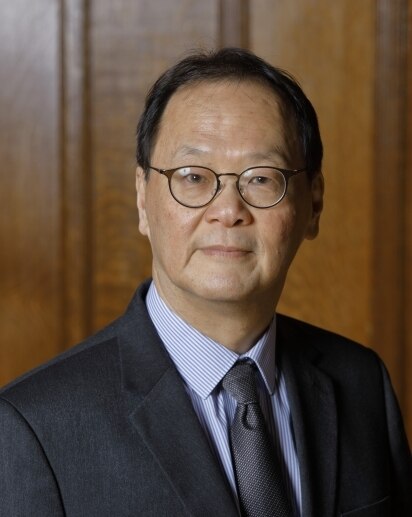
Recently, David Capes was in Edinburgh, Scotland, and had the chance to sit down and talk with Dr. Timothy Lim about the Dead Sea Scrolls. 

This discovery was one of the most important archaeological discoveries of the 20th century.

Who Is Timothy Lim?

Timothy Lim is Professor of Hebrew Bible and Second Temple Judaism at the University of Edinburgh.  Born in Canada, Timothy and his family made their home in Scotland during his illustrious career. 

He is recognized as one of the world’s leading authorities on the Dead Sea Scrolls.

He loves running, playing tennis, working out, AND he is good guitar player.

What Do the Dead Sea Scrolls Tell Us About the Shape of the Cannon?

One of the many contributions the Dead Sea Scrolls have made is that they give us some insight into the books that made up authoritative scripture.

We’d probably like to think of the Bible as containing the same books, in the same order, and using all the same words for all time.

In fact, the Dead Sea Scrolls demonstrate the fluidity of the biblical text at the time of the turn of the millennium from BC to AD, or if you prefer BCE to CE.

It may be good to remember that the Dead Sea Scrolls were the library of a Jewish community contemporaneous to the time of John the Baptizer, Jesus, Peter and Paul.

What Do the Dead Sea Scrolls Tell Us About Biblical Interpretation?

The people of the scrolls had a particular view of the world and that came out in the way they interpreted their biblical books.

Among the books recovered have been biblical commentaries that go by the title pesharim (Hebrew plural). Dr. Lim has done a great deal to illuminate this kind of commentary (pesher is the Hebrew singular). 

It is both a method or approach to Scripture and the results of that method. We find a number of places in the New Testament where writers employed a similar method (though not altogether the same).

To hear the podcast (22 minutes) click here.

Books by Dr. Timothy Lim

Among his many books are:

The Dead Sea Scrolls: A Very Short Introduction, 2nd edition (Oxford University Press, 2017)

The Formation of the Jewish Canon (Yale University Press, 2012)

The Oxford Handbook of the Dead Sea Scrolls (with John Collins, Oxford University Press, 2012)

For a transcript of this podcast, click here.

More resources

Want more Stone Chapel Podcasts on some great topics. Just click here.

What’s more, you can get information on upcoming lectures at Lanier Theological Library. Just click here.

The Dead Sea Scrolls (Part One) with Timothy Lim

To hear the podcast (18 minutes) click here.

Recently, David Capes was in Edinburgh, Scotland, and had the chance to sit down and talk with Dr. Timothy Lim about the Dead Sea Scrolls. 

This discovery was one of the most important archaeological discoveries of the 20th century.

Who Is Timothy Lim?

Timothy Lim is Professor of Hebrew Bible and Second Temple Judaism at the University of Edinburgh.  Born in Canada, Timothy and his family made their home in Scotland during his illustrious career. 

He is recognized as one of the world’s leading authorities on the Dead Sea Scrolls.

He loves running, playing tennis, working out, AND he is good guitar player.

What Are the Dead Sea Scrolls?

About seventy years ago, the first of eleven caves was found containing scrolls from the first century BC to the first century AD. 

This is about the time the Jesus movement started. Today, and this is controversial, a 12th cave appears to have been found. More about this on another podcast.

These scrolls are significant in many ways because they give us a window into that period like no other. 

In all, between 800-1000 manuscripts have been discovered.  About twenty-five of those are relatively intact. 

All the rest are fragments.  Scholars have been piecing them together and exploring their significance since the 1950s.

Qumran is the area where these scrolls were found. So, they are sometimes referred to as the Qumran scrolls. 

Both biblical (Old Testament) and non-biblical manuscripts were discovered there. There are many documents we never knew existed. 

Every book of the Hebrew Bible was found except for the book of Esther. There are theories about that. 

In part two of this podcast we explore more about the Dead Sea Scrolls.

Books by Dr. Timothy Lim

Among his many books are:

The Dead Sea Scrolls: A Very Short Introduction, 2nd edition (Oxford University Press, 2017)

The Formation of the Jewish Canon (Yale University Press, 2012)

The Oxford Handbook of the Dead Sea Scrolls (with John Collins, Oxford University Press, 2012)

For a transcript of this podcast, click here.

To hear the podcast (18 minutes) click here.

More resources

Want more Stone Chapel Podcasts on some great topics. Just click here.

What’s more, you can get information on upcoming lectures at Lanier Theological Library. Just click here.

“To Cast the First Stone” with Tommy Wasserman

To cast the first stone is an expression in English and in Swedish.  It comes from a beloved passage in John’s Gospel (7:53—8:11). 

Tommy Wasserman talked recently with David Capes on The Stone Chapel Podcasts about a book he co-authored with Jennifer Knust.  It is entitled To Cast the First Stone: The Transmission of a Gospel Story (Princeton University Press, 2018).

Who Is Tommy Wasserman? 

Tommy Wasserman grew up in Sweden and became a follower of Jesus during his teen years. He has distinguished himself as one of the world’s top textual critics of the New Testament. 

His judgment and attention to detail sets him apart in the discipline.  His enthusiasm for textural criticism is infectious.

He is a professor of New Testament at the Örebro School of Theology in Sweden and a professor of biblical studies at the Ansgar Theological School in Norway. 

To Cast the First Stone Stories

One of the well known stories from the Gospel of John has to do with a dramatic confrontation between Jewish leaders and Jesus over a woman “caught” in the act of adultery. 

Even casual Bible readers observe a change in the type or the addition of brackets around the story.  If they read in the margins, they discover that the earliest and best manuscripts do not contain that story. 

So, it is unlikely that it was in the first version of the manuscript.  Only later did this episode enter into the tradition. 

Jennifer and Tommy take great care to trace how this account came into the early manuscripts and has become a mainstay of our own Bible tradition

What Scholars are saying about the book

Here is what Chris Keith has to say about it:

“Knust and Wasserman use the story of the adulteress to illustrate the fascinating transmission history of gospel literature and the various personalities and forces that contributed to the process. To Cast the First Stone will undoubtedly become the standard book on this story.”

Chris Keith, author ofThePericope Adulterae, the Gospel of John, and the Literacy of Jesus

To watch the panel discussion featuring Tommy Wasserman and Dan Wallace click here.

To watch David Capes’ interview with Tommy Wasserman and Dan Wallace at Biblical Literacy (Champion Forest Baptist Church) click here.  

More resources

To hear the podcast (20 min.) click here.

Want more Stone Chapel Podcasts on some great topics. Just click here.

What’s more, you can get information on upcoming lectures at Lanier Theological Library. Just click here.

Formatting the Word of God with Dan Wallace

In May 2023 Dan Wallace lectured at the Lanier Theological Library. His topic was “Formatting the Word of God.”  Before the lecture, he sat down to talk with David Capes for “The Stone Chapel Podcasts.”

Who is Dan Wallace? 

Dan Wallace is the CEO and executive director of the Center for the Study of New Testament Manuscripts (CSNTM) in Plano, Texas.

Formatting the Word of God

From the beginning, people who hand copied the New Testament manuscripts put into the manuscripts features which made the reading of Scripture easier.  But these features led to certain interpretations.

The Bible has certain formatting to it. It has to. Every literary product has to. For example, how wide should the margins be for a text? How wide should the text be? Is it going to be on a three-foot papyrus roll? So, there’s some formatting.

Certain features, for example, make it easier to read in public.  Other features of copying indicate respect for and devotion to Christ. 

Dan’s lecture will be rich in imagery drawn from the thousands of photographs of these amazing manuscripts that this organization has taken over the last decades. (You can find a link to it below. It was a little over one hour long.)

Still thousands of manuscripts remain unphotographed.  But his organization has discovered many other manuscripts not previously catalogued. 

Even the form of the book itself—the codex not scrolls or rolls—has a certain interpretive significance. 

The Center for the Study of New Testament Manuscripts

Because these manuscripts and inks are organic, over time they will decay, fade, and become unreadable.  That’s one reason Dan started the Center for the Study of New Testament Manuscripts: to preserve these valuable artifacts. 

But there is another reason.  The goal of the center is to make high quality, digital images available to all people.  If the staff  meet their goal, then in the future anyone in the world with an internet connection will be able to view images of available manuscripts. 

Formatting Today

Modern Bibles continue the interpretive features.  Chapters, verses, columns, italicizing, page numbers, cross-referencing, and interpretive notes are employed by publishers and these guide readers to interpret the texts. 

For the website of the CSNTM, go to www.csntm.org

To hear the complete lecture click here.

To hear Dan Wallace’s previous podcast on the history and mission of the CSNTM click here.

Would you like a transcript of this podcast? Click here.

More resources

Want more Stone Chapel Podcasts on some great topics. Just click here.

What’s more, you can get information on upcoming lectures at Lanier Theological Library. Just click here.

To hear the podcast (22 minutes) click here.