Jesus among the Gods with Mike Bird

To hear the podcast click here.

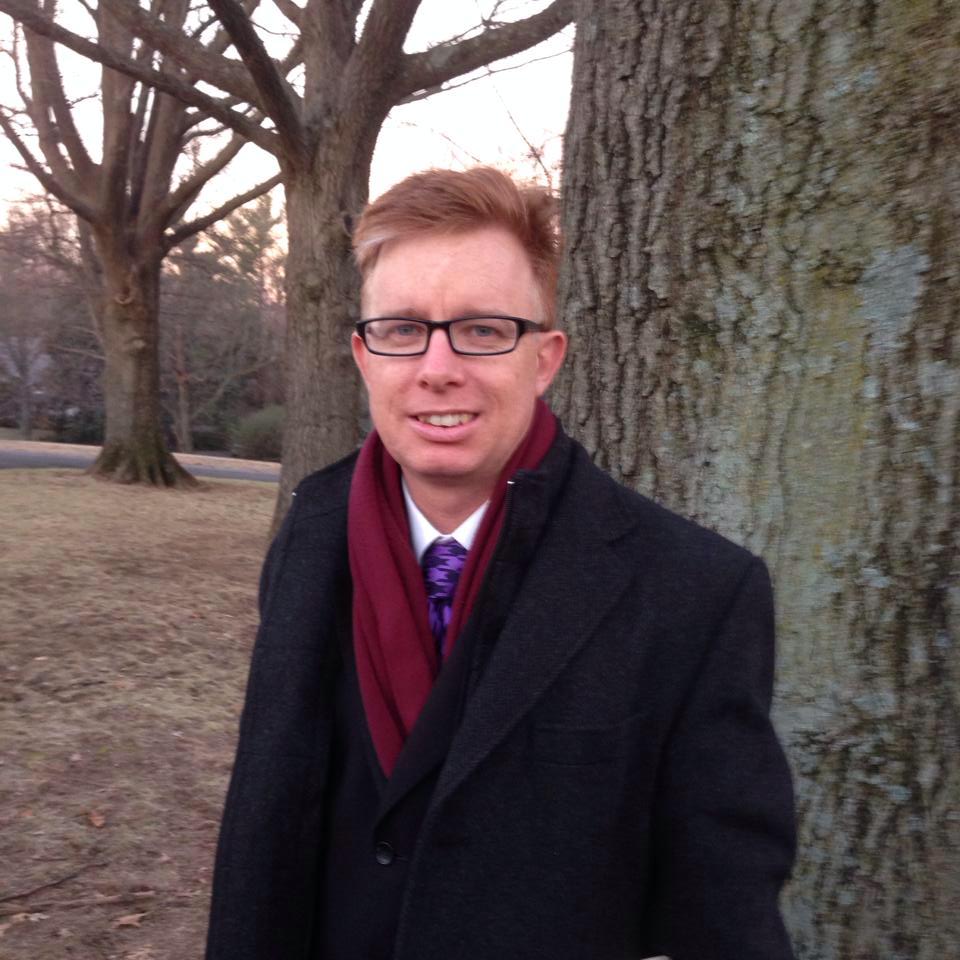
David Capes and Michael Bird have been friends for many years.  And they share some common academic interests.  Recently, Mike released an important new book.  He joined David Capes from his home in Australia to talk about it on the Stone Chapel Podcasts.

Who is Michael Bird? 

Michael (Mike) Bird is a New Testament scholar, an Anglican priest, and he is Deputy Principal at Ridley College in Melbourne, Australia. 

He loves the Bible and takes delight in calling himself a Bible nerd.  Mike has a wonderful sense of humor, and he knows more about American politics than most Americans. 

He loves tennis, and he hates coffee.  Mike is the author of lots of books.  You can find many of them at the Lanier Theological Library.

Jesus among the Gods

Jesus among the Gods: Early Christology in the Greco-Roman World (Baylor University Press, 2022) is one of Michael’s newest books. 

He dedicated it to David for the years of friendship and his contributions to Christology. 

In the book Mike looks at the question: what does it mean to call Jesus “God” or “god”?  That may seem self-evident 2000 later, but the question is more complex. 

Bart Ehrman’s work encouraged Mike to look into this question. What he found is a spectrum of divinity from unbegotten and absolute gods. To begotten gods, who were often people elevated to some divine status or deity, like Caesar or Heracles. 

So did this way of thinking influence early Christians as they were struggling to express the significance of Jesus?

More topics in the discussion

The conversation weaves through a number of topics including whether monotheism is a term that is useful or should it be retired.

And the depth of Hellenistic culture in the Bible, and the unlikely prospects that Judaism and Hellenism are petitioned off and did not influence one another. 

The book is fascinating and a must read for anyone interested in understanding the earliest Jesus communities. 

Jesus among the God endorsed by Capes

David Capes endorsed the book before he knew Michael was going to dedicate it to him:

With his characteristic good humor and judicious attention to detail, Michael Bird pushes the conversation regarding early Christologies in new and constructive directions. 

Having an ear attuned to both Jewish and Greco-Roman voices, Bird offers a straightforward taxonomy of what constituted ‘divinity’ in the ancient world and makes a serious case that elements of early Christologies are inherently ontological.

David B. Capes, Director, Lanier Theological Library

Additional Resources

You can watch Michael Bird’s lecture, An Invasive Story: Paul’s Theology Between Messianic Event and Salvation History at the Lanier Theological Library in 2016 by clicking here.

To learn more about Michael Bird click here.

For a transcript of this podcast, click here.

More resources

Want more Stone Chapel Podcasts on some great topics? Just click here.

What’s more, you can get information on upcoming lectures at Lanier Theological Library by clicking here.

To hear the podcast click here.

The Surprising Rebirth of Belief with Justin Brierley

Justin Brierley, a broadcaster, author, and speaker, will join us September 22, 2023 at 7.00 pm in the Stone Chapel. He will offer a talk on his book, The Surprising Rebirth of Belief in GodThe subtitle of the book is actually the big idea of the book: Why New Atheism Grew Old and Secular Thinkers Are Considering Christianity Again. 

Who is Justin Brierley? 

Justin lives in London.  For decades he has been hosting conversations between atheists and believers on his popular show, The Unbelieveable Show.  His show has been at the cutting edge of what is happening in culture. 

A few years ago, he had Mark Lanier as a guest on his show, and he recently came into our Houston orbit.  He is an amazing thinker, a gifted communicator, and hospitable host for people with differing worldviews.

To hear the podcast click here.

About Brierley’s first book

After hosting his show for ten years, he wrote his first book: Unbelievable: Why After Ten Years of Talking with Atheists I’m Still a Christian.  He shares some of that story here, in this podcast.

Here is what Philip Yancey has said of Justin’s upcoming book:

“[T]his wide-ranging and stimulating book sounds a hopeful note… a fearless engagement with the most daunting issues of our time.”

And John Lennox:

“Eminently readable… Brierley has done us a huge service… This is a first-rate book: get it, read it, and give it to others.”

The Surprising Rebirth of Belief podcast

This is a great podcast, one you will not want to miss.  He is addressing very pressing issues of our time. 

More Resources including The Surprising Rebirth of Belief book

For a link to his first book click here: Unbelievable: Why After Ten Years of Talking with Atheists I’m Still a Christian.

 For a link to his newest book (2023) click here: The Surprising Rebirth of Belief in God: Why New Atheism Grew Old and Secular Thinkers Are Considering Christianity Again.

To hear the podcast click here.

The Sacraments of the Roman Catholic Church with Father Mario Arroyo

Father Mario Arroyo and David Capes have cohosted a radio show in Houston for 15 years.  It is called A Show of Faith on AM 1070 The Answer

Father Mario stopped by the Lanier Theological Library and Learning Center to talk with David Capes about the sacraments of the Catholic Church. To hear the podcast (22 minutes) click here.

Who is Mario Arroyo? 

Father Mario Arroyo has been the pastor of St. Cyril of Alexandria Catholic Church in Houston, TX.  He was born in Havanna, Cuba, and immigrated when he was boy to the USA during the Cuban revolution. 

This life-long Catholic grew up in Denver and had a dramatic, life-changing “conversion” at the age of 21. Since then, he has served God in the priesthood.

What are the sacraments? 

Father Mario describes a sacrament as an encounter with the real presence of God.  He emphasizes the notion of “common-union” with Christ.  He describes all the sacraments as God-initiated.

Every church has sacred practices they do.  Many Protestant churches recognize two: the Lord’s Supper (Communion or the Eucharist) and baptism.

Because some want to avoid the word “sacrament,” they use other words like “ordinances.” That’s because Jesus “ordered” his disciples to do these practices. 

So here are the seven sacraments with a one-line description. 

  1. Eucharist—an entering into a common-union with the Lord Jesus; the real presence of Christ is encountered in the bread and wine
  2. Baptism—not our choice of God, but God’s choice of us
  3. Reconciliation—Christ absolves people from their sins
  4. Confirmation—God firming up and fulfilling his children through the gift of the Spirit
  5. Anointing of the Sick—God’s power to carry people through difficult illnesses
  6. Holy Orders—God ordering certain people into his service as bishops, 
  7. Marriage—the couple gives this sacrament to each other, acting as a priest to the other, while the priest simply superintends the ceremony.

There are a lot of great bits of information in this podcast. Be sure to listen to the end and hear Father Mario’s nugget of wisdom. 

To hear the “A Show of Faith” Podcast  on BuzzSprout click here. For a transcript of this podcast, click here.

More resources

Want more Stone Chapel Podcasts on some great topics. Just click here.

What’s more, you can get information on upcoming lectures at Lanier Theological Library. Just click here.

To hear the podcast (22 minutes) click here.

Marriage Relations according to Aristotle and Paul with Lynn Cohick

In his teaching about family relations (e.g. Eph. 5:21–6:9), Paul is echoing descriptions of a household that had been formalized by Aristotle, but in so doing Paul turns Aristotle’s teaching on its head. Dr. Lynn Cohick is Distinguished Professor of New Testament and Director of Houston Theological Seminary at Houston Christian University. Among her many publications are The Letter to the Ephesians (NICNT) and (with Amy Brown Hughes) Christian Women in the Patristic World: Their Influence, Authority, and Legacy in the Second through Fifth Centuries.

To hear the podcast (10 minutes) click here.

“Exegetically Speaking” is a weekly podcast of the friends and faculty of Wheaton College, IL and The Lanier Theological Library. Hosted by Dr. David Capes, it features language experts who discuss the importance of learning the biblical languages—Hebrew, Aramaic, and Greek—and show how reading the Bible in the original languages “pays off.” Each podcast lasts between seven and eleven minutes and covers a different topic for those who want to read the Bible for all it is worth.

If you’re interested in going deeper, learn more about Wheaton’s undergraduate degree in Classical Languages (Greek, Hebrew, and Latin) and our MA in Biblical Exegesis

You can hear Exegetically Speaking on SpotifyStitcherApple Podcasts, and YouTube. If you have questions or comments, please contact us at exegetically.speaking@wheaton.edu. And keep listening. 

Christ among the Messiahs with Matt Novenson

Matthew Novenson joined David Capes on The Stone Chapel Podcasts to talk about his important book, Christ among the Messiahs: Christ Language in Paul and Messiah Language in Ancient Judaism (Oxford University Press).

The book has made a big contribution to the study of Christology in the earliest years of the Jesus movement.  Though it has been out ten years, it is worth sharing with a new audience. 

Who is Matthew Novenson? 

Matthew is originally from Tennessee.  He now serves as the Professor of Biblical Criticism and Biblical Antiquities at the University of Edinburgh. 

Christ among the Messiahs 

For many years some scholars have regarded the word “Christ” as just another name for Jesus in the earliest writings of the New Testament, namely, the letters of Paul.  But Matthew makes a convincing case that the word “Christ” in Paul means “Messiah.”   

This may seem to some only natural, but it is a momentous thing.  It involves a whole new reassessment of Paul’s language and his Jewishness.  

We find messiah language in various places like the Old Testament, Paul’s letters, the Dead Sea Scrolls, and other second temple Jewish texts. 

Novenson often employs the word “honorific” as a noun to discuss Paul’s use of “Christ” in his letters.  It comes from the discipline of “classics,” namely, the study of the ancient Greek and Roman civilizations. 

Honorifics are like titles in a way but they were intended to magnify the name of the person. The most famous is Caesar “Augustus.” 

The idea that “Christos” as it referred to Jesus is not limited to name or title.  There is a third way, an honorific.

Novenson has done a great deal to shape the field of New Testament studies with this and other books.  

Other Books by Matt Novenson

Paul: Then and Now (Eerdmans)

The Grammar of Messianism: An Ancient Jewish Political Idiom and Its Users(Oxford UP)

For a transcript of this podcast, click here.

More resources

Want more Stone Chapel Podcasts on some great topics. Just click here.

To hear the podcast (22 min) click here.