
Abraham: Friend of God
Here is a transcript of a recent conversation I had with John Lennox regarding Abraham and his role as an exemplar of faith. The conversation comes from a podcast I do called “The Stone Chapel Podcast” on the ChurchLeaders Podcast Network.

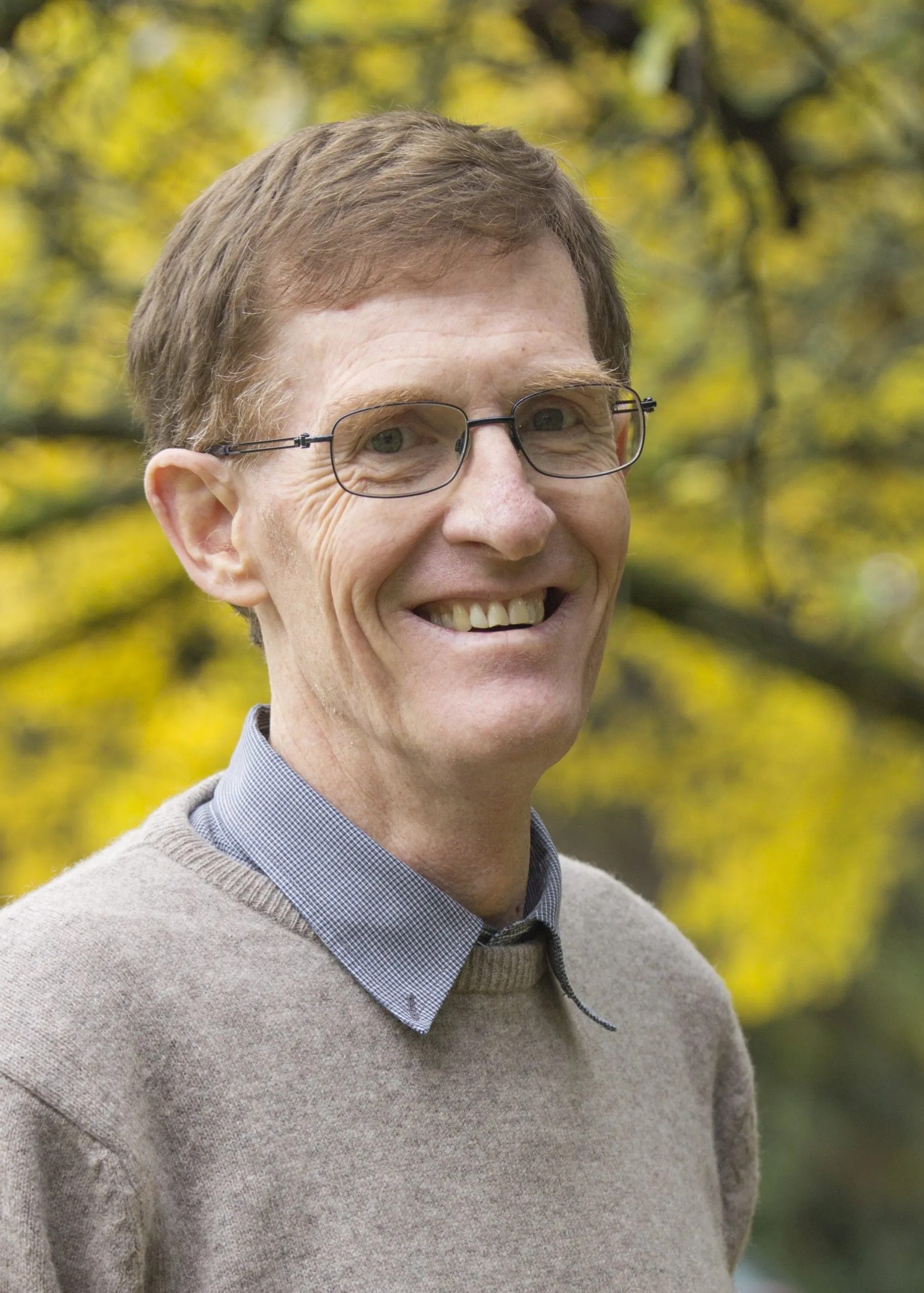
John Lennox
Hello, I’m Dr. John Lennox. I’m an Emeritus Professor of Mathematics in the University of Oxford. But I’m also passionate about scripture, teaching scripture, and Christian apologetics.
David Capes
Dr. John Lennox, welcome back to The Stone Chapel Podcast.
John Lennox
Thank you very much. I’m delighted to be with you again.
David Capes
Well, you’ve been with us and some of the most hits and downloads we’ve gotten on our podcast have come from you, because you’re such an inspiration to all. The last one we did was on AI. And it’s been a little while, but I’m glad to be back talking to you. Today we are in Oxford at St. Ebbes Church, with John Lennox. Today we’re here to talk about his book, A Friend of God: the Inspiration of Abraham in an Age of Doubt. It’s a great book.
John Lennox
Well, I’m glad you’ve read it. I think that’s immensely encouraging. And I have been in general, extremely encouraged by the response to it since it’s only been out a short while.
David Capes
This is not the first biography you’ve written of important Old Testament figures.
John Lennox
No, I started with Daniel. I wrote a book about his entire prophecy. It’s not just a character study of him. But then I did a fairly substantial book on Joseph within the context of his family. In other words, the last major section of Genesis.
David Capes
That’s a lot of chapters dedicated to Joseph.
John Lennox
That’s right. So I thought that the next logical subject to tackle would be Abraham. It was actually a friend of mine, who suggested that I give some lectures on Abraham for a conference, the ELF conference in Europe. And I did that. And immediately afterwards, people said, you must turn this into a book. Henc
David Capes
Well, it’s a wonderful read. And it’s the kind of character study, the kind of investigation into Abraham’s life that I think helps us. We were talking earlier about my concern that we as Christians, short circuit things by not reading the Old Testament very long, or very well. I did a study years ago and about 82% of sermons (in US Protestant churches) are on the New Testament, which leaves only 18% of sermons for the Old Testament.
John Lennox
That’s a very interesting statistic. I wasn’t aware of it. But Abraham, of all people is held forth in the New Testament as the major exemplar of a person who trusts God. He’s the man of faith. And he’s held out for us to follow that faith in God. And so that certainly catapulted me into really saying, let’s have a serious look at him. And the whole palette of Scripture information about him. In other words, the whole sequence of chapters in Genesis that deal with him without leaving anything out.
David Capes
Warts and all, we might say.
John Lennox
Warts and all, because he is a complex figure. Well, we all are. And I suppose that’s a major point worth making that if God can do something with a man like Abraham then there’s hope for me.
David Capes
Yes. Same thing with the figure of David. Maybe one day you’ll write a book about David! I have a rabbi friend in Jerusalem who says that David broke 9 of the 10 commandments. Now he never told me which one he didn’t break! But anyway, though he’s called a man after God’s own heart. A Friend of God, tell us a little bit about the title?
John Lennox
Well, he’s one of the only people in Scripture who’s called a friend of God. And it’s a very interesting concept, that idea that God can in any way be thought of as a friend of human beings. And really, it goes back in my mind to the pinnacle of creation at the beginning of Genesis. God created the universe by his word, but the very final use of the phrase “and God said” is actually “and God said to them”. God speaks to the humans. And the way in which he interacts with human beings is of course, what the Bible is all about, and offering friendship. And of course, the Lord Jesus, who was the greatest son of Abraham, so to speak, said of his disciples, I call you friends. The information he gave to them as definition of a friend, is someone who knows what his other friend is doing. In other words, the Lord speaks to them and takes them into his confidence. And I think that is such a glorious idea that God can take us into his confidence and along the journey with Abraham. God seems to consult Abraham, which is really an incredible thing to imagine.
David Capes
And Abraham seems to be able to persuade God of things.
John Lennox
Even that is true. But the fact is that there is a real, what we might call friendly, discussion between them about big issues. And that’s encouraging because God encouraged us to talk to him as well.
David Capes
Yes, we can be friends as well.
John Lennox
Yes, that’s right.
David Capes
And enter into God’s friendship. To know not only his works externally, but to know his ways.
John Lennox
Yes indeed. And it delivers us from thinking of God as somehow remote and unapproachable. This is the exact opposite of that. And it’s speaking to us in terms we understand. We know what friendship means as human beings. And the idea of being a friend of God in one sense, is mind blowing. But in another sense, if we’re created in God’s image, you would expect something like that to be possible.
David Capes
Exactly. If we are in God’s image, there ought to be a complementary connection. Your subtitle talks about the inspiration of Abraham. Seeing him as an inspirational figure like Saint Abraham, some traditions might do. But you say that within an age of doubt. The stories about Abraham are about faith, being a man of faith, as an exemplar of faith. But we live in this time of doubt. How do you think Abraham now can address us as a man of faith who stumbled, but he also can be an inspiration for us in our time.
John Lennox
The first thing I would say is that as far as we can understand from scripture, Abram came from a pagan background. And that’s quite important, because our world has changed very much recently, in the West, at least, from a world strongly influenced by the Judeo-Christian tradition to one that’s largely influenced by any traditions other than Christianity. And therefore, him starting at point zero, so to speak, I think can encourage us to see that God’s revelation to him, which led him to increasingly be sure of God and His promises. And the story is very much about promises, delayed fulfillment, and do you hang on in there, and so on. And it’s very true to life. And we are in an age of uncertainty and doubt, by and large. Though there are some people who are very sure of themselves. But without a deep anchor, all of us would be unsure. And I think, the marvelous thing about this story, if we follow it along, and respond to God, as Abraham did, however imperfectly, then our confidence increases. And we no longer are influenced deeply by existential doubt, that would cause us to sadly miss the purpose that God has for us.
David Capes
To miss our purpose and our meaning. I was amazed and I didn’t know this. I should have known this is a New Testament scholar, that Abraham is mentioned [in the New Testament] more than any of the other OT person. And he’s quoted, he’s referred to, he’s the exemplar, as you said, of faith. Let’s talk about faith itself. There’s a lot of people writing about, thinking about faith these days. What is faith? What does John Lennox say about what is faith?
John Lennox
What I’ve tried to do is to understand what is being said here. We’re talking about trust in God. And if you start simply with etymology, the word faith in English comes from the Latin fiidem, which has more to do with trust. I mean, we get from it the word fidelity. So, the idea is one person trusting another person. And that’s in short supply today, which is why we need so many lawyers. And it’s a real problem in the economic world. People are desperate to find trust.
David Capes
Who can you trust? I keep hearing that question, who can you trust? We’re here at the OCCA summer school. You spoke this morning. One of the first speakers was talking about that very question. Who can you trust? Because there’s so much information out there. There’s so much bad information out there. Who or what can you trust?
John Lennox
The story of Abraham begins with this pagan man in the Middle East, the ancient Near East. And God reveals Himself to him. And it’s summed up in the New Testament, in a very short phrase: “the God of glory appeared to our father Abraham”. Now, we’re not told much about that. But I find the idea very interesting, because a similar thing happened to the major Christian Apostle Paul, when he was on the Damascus Road, persecuting Christians. Then he saw a very bright light. And the God of glory appeared to him as well. And God showed him something of how great and glorious he was. And Abraham responded and went on this incredible journey. He didn’t really know where he was going. But he knew who he was going with.
David Capes
He had no map; he had no GPS. He knew there were roads this way. And there are people down that way.
John Lennox
No, God spoke to him and said get going to the land that I will show you. And it’s utterly remarkable. It pays to sit and think about that. How would we feel about doing that? How would our families feel about that? That’s an amazing thing in any culture, and at any time. But the idea behind it is that God speaks, He reveals Himself. And that’s hugely important, because scripture itself claims to be a revelation from God. And God speaks to us through that revelation, to which we are invited to respond.
David Capes
Well, I have a friend who’s written a book recently making the case that in the New Testament, at least, the word pistis, which is often translated “faith,” or sometimes trust, but also has the sense of an allegiance. And allegiance to God. We are connected. Maybe that’s the friend part. We are connected and I have allegiance to you because we are friends.
John Lennox
Yeah, I like that idea. I think it’s hugely important, that idea that we’re following someone we trust, and to whom, therefore, we owe allegiance. I think that fills it out in a very important way. Because that’s the essence of the Christian gospel. And you asked me about the nature of faith, the Christian faith is evidence based. That is, it’s not a leap in the dark as so often people think. It’s a step, following something that you’ve experienced or seen, and Abram must have seen something very powerful when God spoke to him. It wasn’t some mere chimera of the imagination, that God revealed himself in some special way. And that’s what we’re promised in New Testament terms. Why would I want to trust Christ? Well, we’re given a lot of evidence. Now what happened to Abraham all the way along? A lot of things happen that built up the evidence that God was with him. it didn’t all happen at once.
David Capes
He didn’t become a great nation, develop his reputation, be blessed by God, overnight. No, it was something that took a lifetime.
John Lennox
Yes, for most of his life. He was a small nomadic tribe wandering about the Middle East.
David Capes
At the very end of that charge, and also promise, God says, “I will make you a great nation and through you, all the families of the earth will be blessed.” How do you interpret that last phrase? Through you all the families of the earth will be blessed.
John Lennox
Well, the interesting fact, as pointed out by many people, including the late chief rabbi of the UK, is that a huge proportion of the world population actually owe their allegiance in some way to Abraham. Jews, Muslims and Christians. But I think we begin to see the answer to that within the book of Genesis itself. Because as I said a moment ago, most of his story, he’s just a small tribe. But at the end of the book, you find that one of his descendants, Joseph, becomes something like the Minister of Agriculture of Egypt, and economically saves the world. And it seems to me that’s an indicator within the book of how this is going to happen. And the answer, the ultimate answer to it is that one of the descendants of Abraham, the greatest descendant, the most important is Christ. He offers forgiveness to everybody that trusts him, and new life, and a power to live. And in that sense, Christianity has spread around the globe, and is still spreading in spite of all the opposition.
David Capes
[The influence of Christianity] seems to be waning in the West. But in places like Africa, and China and South America, I mean, it’s blowing the doors off.
John Lennox
You make a very important point. The West has been very much sustained by Christian ethical dimension and the Old Testament commandments for centuries. But that has waned, as you say. But in the majority world, Christianity is growing and very obviously growing and in a thrilling way. And so, I don’t think the evidence for that promise being fulfilled is diminishing in any way. It’s rather increasing.
David Capes
In Paul’s language, it’s for Jew and Gentile, male and female, slave and free.
John Lennox
Yes, everybody on the same basis of faith in Christ, so that I can say that I am a son of Abraham, in the sense that I share his faith and trust. And that is a wonderful thing. It includes us, in the people of God, from whatever background we come.
David Capes
There are some sons of Abraham genetically through DNA that have left Abraham behind. But we have been, as Christians, (again Paul’s language), grafted in, made part of the family. Adopted, if you want to use that language.
John Lennox
That’s exactly right. And what has happened there, according to Paul, and those famous chapters of Romans 9 to 11, is that the burden of witness to God has shifted from the Hebrew nation to Gentiles. And it is predominantly Gentile at the moment. But there are signs that that may change according to the biblical record.
David Capes
It could well be. I love the way the book of Revelation sums it all up when there’s a vision of 144,000. And that’s what he hears. He hears that there’s 144,000, and they’re all out of Israel. There’s 12,000 from this tribe etc. And then when he turns, he sees a multitude that cannot be numbered and it’s of every tribe, and of every language, and every people, every ethnic group.
John Lennox
That’s right. Many words are used in that sentence. Which is very interesting, which is hammering the fact that this is a message for the whole world. And, that sense is traceable back to Abraham. I felt it was important, at least to make an effort to reverse the point that you made earlier that we pay far too little attention to the biblical roots of the Christian faith in the Old Testament.
David Capes
[And the Old Testament] was the Bible of Jesus. The Bible of Paul and the early church, so we should be paying more attention to it. I don’t know exactly what the right percentages ought to be. But I think we should be reading and absorbing and just digesting these stories as exemplars, as you said. Right now as part of our worship, as part of our devotion.
John Lennox
Absolutely because a lot of the New Testament depends on it. Paul uses Abraham again and again to reason his theological case, as well as the moral and spiritual implications of the gospel. And the last book of the Bible that you’ve mentioned, has an absolute huge store of allusions and citations of the Old Testament. So, it all culminates there and to remove the Old Testament from our thinking and preaching is to cut off part of the lifeblood of the Bible.
David Capes
Well, it’s a great book, and I would recommend it. It’s called A Friend of God: The Inspiration of Abraham in An Age of Doubt by Dr. John Lennox. John, you’re a good friend to the Lanier Foundation. We thank you and I’m grateful that you could be a part of our podcast today.
John Lennox
Well thank you very much. Delighted to be with you.


 A Word in Edgewise
You must be logged in to post a comment.