Page 3 of 19

The Open Sword

In this edition of “Exegetically Speaking” . . .

Dr. Adam Miglio, Associate Professor of Archaeology at Wheaton College, draws upon how an “open sword” was understood in the ancient Near East to inform a reading of Ezekiel 21:28. A fascinating reflection on Babylon as God’s sword in that chapter.Adam Miglio wheaton

You can copy and paste the following URL in your web browser:

https://exegeticallyspeaking.libsyn.com/the-open-sword

Or click here.

The podcast is approximately 7 minutes in length

Cover Me with Your Wings

In this edition of “Exegetically Speaking” . . .

Dr. Michael Graves, Armerding Professor of Biblical Studies, considers some of the challenging passages in Ruth and looks at how reading the text in Hebrew can illumine these verses.

graves-michael-3
Dr. Michael Graves, Wheaton College Bible and History Department


You can copy and paste the following URL in your web browser:

https://exegeticallyspeaking.libsyn.com/-cover-me-with-your-wings

or click here.

The podcast is approximately seven minutes in length

Graffiti prayers

A new article by Paul van Pelt and Nico Staring takes a creative look at graffiti left in Saqqara.  Saqqara was the necropolis of one of the most significant cities in Egypt, Memphis.  Most studies of ancient graffiti have focused upon “textual graffiti,” but as we know graffiti itself is a visual phenomenon, and pictures and images make up much of “graffiti.”  But interpreting non-textual materials can prove difficult from the vantage of a culture far removed.

Few people were literate but that did not stop them from drawing pictures or copying images they found meaningful.  The authors propose that some types of “figural graffiti” were in fact prayers meant to secure the place of the deceased in the afterlife or to, in some way, keep the graffiti artist in connection with the tomb and the departed.

In addition the authors take a stab at the social location of those who composed “figural graffiti” compare to those who composed “textual graffiti.”

“Graffiti is one of the few tools you have if you have almost nothing.”
“Interpreting Graffiti in the Saqqara New Kingdom Necropolis as
Expressions of Popular Customs and Beliefs”
Rivista del Museo Egizio 3 (2019). DOI: 10.29353/rime.2019.2577

The Bible for All Its Worth

In this edition of Exegetically Speaking

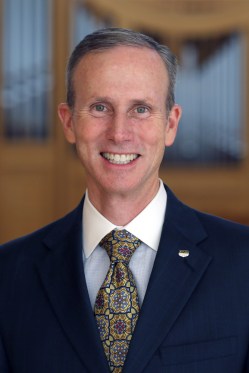
. . .  Dr. Todd Still, Dean of the George W. Truett Theological Seminary of Baylor University, joins us in the studio to reflect upon how learning the biblical languages helps to enrich our reading of the Bible.

Todd-Still-cropped
Dr. Todd Still


You can copy and paste the following URL to your favorite browser:

https://exegeticallyspeaking.libsyn.com/the-bible-for-all-its-worth

or click here.

The podcast lasts approximately 7 minutes.

A Dissident Rabbi

As reformation is fomenting in Europe, there is a Jewish fellow who proclaimed himself Messiah and developed a huge following in the Ottoman Empire and parts of Europe.  According to him, the redemption of the world was at hand.  His name was Sabbetai Zevi.  The year is 1665. 9780691183572

His followers set aside their traditional Jewish beliefs and practices for new standards set by Zevi.  But there was a naysayer in the bunch, a dissident rabbi who warned his countrymen that Zevi was not the Messiah after all.  So they should abandon their enthusiasm for this man and return to their traditional practices.  His name was Jacob Sasportas.  A new book, written by Yaacob Dweck, provides a biography of this Separdic rabbi who stood up to Zevi.  It is published by Princeton University Press.

As it turned out, this “messiah” converted to Islam at the behest of the Ottoman sultan.  It’s was a wild and crazy century for Europe and the Ottoman Empire.  This book tells a fascinating story.   For more click here.